
Published
05/11/2025 às 12:49
New international study reveals how textured sunflower seed protein could become the next big revolution in the plant-based protein market.
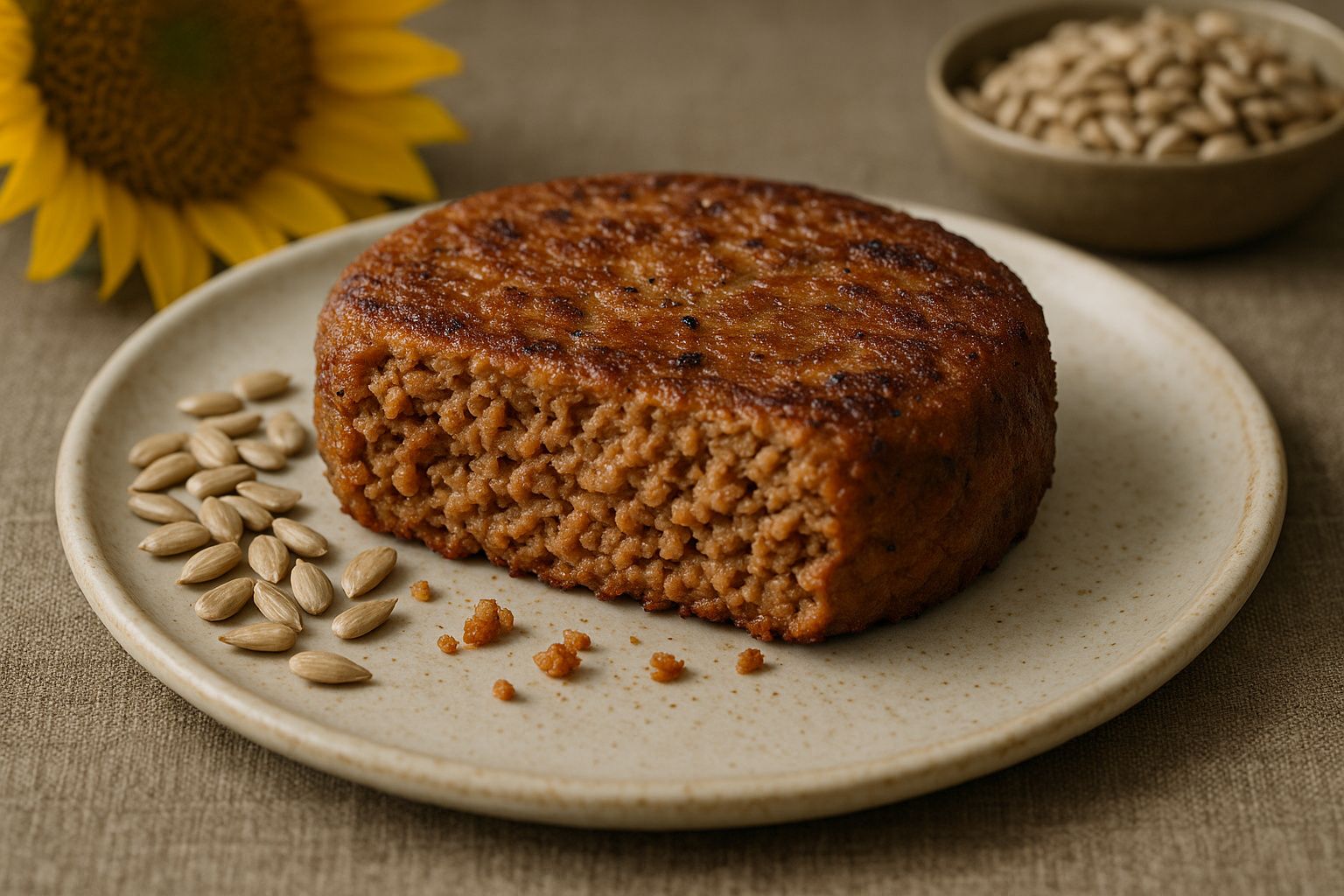
Em June 2025, researchers from State University of Campinas (Unicamp), in partnership with the Fraunhofer Institute IVV, Germanythey presented a plant-based meat made from refined sunflower seeds.
The advance promises transforming the global market for sustainable proteinswhich is growing rapidly between vegan and vegetarian consumersFurthermore, it reflects the worldwide interest in healthy, non-GMO, and environmentally responsible foods.
Innovative development and composition process
The study detailed each stage of product development. First, the scientists They removed the oil and the dark peel. from the seeds to refine the inner core.
Then they They ground the inside of the seeds.producing a Highly pure flour, rich in nutrients..
The team developed two distinct formulations: one with toasted sunflower flour and another with textured protein, both enriched with tomato powder, spices and vegetable oils.
These oils included sunflower, olive and flaxseed, which guaranteed mild aroma and uniform texture.
According to report by FAPESP Agency, confirmed by Vegconomist e Protein Production Technologythe tests carried out in June 2025 got promising results in terms of flavor, consistency, and sensory acceptance.
Nutritional results and scientific impact
Laboratory data revealed that the version with textured sunflower protein presented better structure and nutritional performance.
Therefore, she was considered more balanced across protein value and lipid profile, highlighting the presence of monounsaturated fatty acids.
In addition, the product presented 49% of the recommended daily intake of iron, 68% zinc, 95% magnesium e 89% manganese, according to technical reports from Fraunhofer IVV.
These indices place the sunflower among the main candidates for partial replacement of animal meat, combining pleasant taste and relevant nutritional benefits.

Research highlights Brazil’s role in advancing sustainable proteins.
To Maria Teresa Bertoldo Pacheco, researcher at Food Technology Institute (ITAL)refined sunflower flour presented neutral taste and aroma, ideal for various food formulations.
According to her, the balanced composition of essential amino acids reinforces the digestibility and nutritional value of the protein.
Furthermore, the expert highlighted that the use of non-GMO seeds and growth of cultivation in Brazil strengthen the country’s position in global research on sustainable food.
Thus, the study reinforces Brazil’s leading role in Food innovation, biotechnology and sustainability.
Sunflower seeds and the potential of a new generation of food.
The technical report published in June 2025 showed that the Brazil rapidly expands sunflower cultivation. in the regions Midwest and South.
Therefore, the country can to lead the production of plant-based proteins. of the new generation, taking advantage agricultural infrastructure and technological capacity already established.
Therefore, Unicamp sees the sunflower as a strategic ingredient to create More nutritious and sustainable foods, reducing the environmental impact of meat production.
Furthermore, the researchers emphasized that the intelligent processing of agricultural by-products adds economic and environmental value to the national production chain.
Technological advances and next steps in research
The Unicamp and Fraunhofer IVV They claim that new techniques of controlled extrusion will be applied to improve the fibrous texture of vegetable protein.
According to the group, the objective is To further enhance the appearance and taste of the product to those of traditional meat.
Furthermore, the team believes that this advancement could to drive the creation of a new generation of plant-based foods on Realistic flavor, high protein content, and low environmental impact..
With this, the project reinforces the view that the sustainable and technological food is The natural path to the future of global nutrition..
What if the future of sustainable protein is hidden inside a simple sunflower seed, ready to feed the world in a smarter way?