Proper hydration is essential to a healthy, thriving garden—especially for outdoor plants that spend all day exposed to the sun. While watering cans may be helpful for a small garden or indoor houseplants, garden hoses are multifunction tools that can lend a hand in the garden and around the rest of your yard.
“There are tons of choices for garden hoses,” says the staff at the University of North Carolina at Charlotte’s botanical gardens. “Different hoses can be selected because of use or personal preference.” When it comes to what factors to keep in mind, they recommend considering the hose’ diameter, whether it’s non-kinking, fitting materials, and length.
What We Tested
To find the best garden hoses, we tested various styles in our testing lab as well as at-home in our own yards. We tested 37 garden hoses, evaluating them based on their design, ease of use, durability, and value.
To learn more about how we tested these garden hoses, see our testing process below.
:strip_icc()/kotto-expandable-garden-hose-de2be566908947d9b50dd4ee67fad51b.jpg)
Why You Should Get It
-
With a lightweight build and a kink-free design, this expandable garden hose was easy to use and maneuver, making it convenient for regular garden use.
It’s unanimous—the favorite garden hose among our testing team was the Kotto expandable garden hose. During six months of testing, this hose checked all our boxes: lightweight, easy to move and use, and durable. There were no leaks or kinks during our extended use, and we felt like it was easier to move around the yard to water plants compared to other hoses we tested.
The Kotto garden hose comes in several different sizes, with its largest being 150 feet. However, due to its polyester fabric exterior, this garden hose starts small—33 feet when using the 100-foot hose—and expands with water pressure. This makes storage easy without sacrificing the length you need to cover your backyard.
However, because the Kotto hose shrinks down once the water is off, it’s important to make sure it is completely drained after use. This helps make it easier to wind up and put away.
Overall, the Kotto expandable garden hose was a well-performing and convenient option for regular garden use, whether that’s watering plants or spraying down pots and cleaning tools. We’ve also recommended it to family and friends after six months of using it.
Product Details: Length: 25, 50, 75, 100, or 150 feet | Width: 0.75 inches | Material: Polyester, latex | Maximum Pressure Rating: Not listed
:strip_icc()/expert-gardener-50-foot-medium-duty-pvc-garden-hose-a596691e5df74965895dfa9813c64e89.jpg)
Lightweight, flexible, and kink-resistant—after testing, we chose the Expert Gardener 50-foot medium duty PVC garden hose as the best budget option. Although its price point was on the lower end compared to others we tested, it was still durable and easy to use.
It had a medium firmness while still being fairly flexible and maneuverable. The firmness helped prevent any flattening or squishing when we wound up the hose, yet it wasn’t too firm or heavy that it was unwieldy to use.
The Expert Gardener hose comes into two sizes—50 and 100 feet—and we tested the 50-foot hose option. It connected smoothly to the faucet, and it didn’t leak or drip when in use throughout six months of testing.
It came with a grip connector that made it easier to connect and disconnect from the faucet, which we found helpful. This connector slid around on the hose, and if it were to slide down to the middle while winding up the hose on a reel, we were concerned it could cause kinking. However, it didn’t kink easily during our extended testing, and we noted that it was easy to pull over our hose reel.
In all, we found this garden hose effective for general yard maintenance and watering, performing well with no leaks or drips. While using it at home for six months, we appreciated that it produced a water stream that’s strong enough to be used in a variety of ways with the proper nozzle.
Product Details: Length: 50 or 100 feet | Width: 0.625 inches | Material: PVC | Maximum Pressure Rating: Not listed
:strip_icc()/gilmour-aquaarmor-12-in-x-50-ft-black-hose-8ac7f67a21f6478896e6770ed33e24dd.jpg)
After testing, we chose the Gilmour Aquaarmor garden hose as the best lightweight option. This hose weighs in at 4.18 pounds, making it a great option for those avoiding heavier or bulkier hoses.
During our six months of testing, we found this hose was easy to drag around, and its lightweight design made it easy to use around the yard, as well as to wind up and store away. We didn’t see any leaks, fading, or other changes in quality either. Although it is kink-resistant, we did experience a few kinks during testing. However, these were easily resolved with just a few shakes from where we were standing.
One feature we noticed during testing is that this garden hose is flexible. It bends easily, making it great for corners or obstacles. However, we did find that because it bends so easily, we had to be careful when holding this hose not to overbend it and cut off the water flow.
While PVC can be less durable than other materials, this hose didn’t sustain any damage — even after being dragged over rocks and concrete and around plants. Our testers had no troubles using the hardware to connect to their spigot, noting that the connectors themselves seemed high-quality and sturdy without any leaks.
Plus, as a PVC hose, the Gilmour Aquaarmor hose is safe to drink from, making it a great option for edible gardens. However, when it comes to value, we did notice that the shorter version is a bit pricer in comparison to the 100-foot option, and it may be worth opting for the larger size for the better value.
Product Details: Length: 50 or 100 feet | Width: 0.5 inch | Material: PVC | Maximum Pressure Rating: 300 PSI
:strip_icc()/hydrotech-burst-proof-expandable-garden-water-hose-33c947c146f04e3c973207adf302d5d8.jpg)
Despite the Hydrotech expandable garden hose being one of the longest hoses that we tested, it was lightweight and easy to move and maneuver around our gardens and yards. We tested it for six months and also loved how easy it was to coil up—both when empty and full of water.
Although moving all 200 feet of this hose took time, especially when we were going far away from the faucet, we found it easier to move than other hoses. When dragging it around the yard, we also noticed that if it became caught on large pieces of landscaping, like rocks, it was easy to maneuver the hose off of these obstacles.
The Hydrotech hose also includes an on/off lever on the end connector. With a maximum length of 200 feet, needing to run back to your water source to turn off the water so you can change hose nozzles or take a break from watering can be a hassle. With this lever, however, you can pause the water flow on the usable end, allowing for easy breaks or hose nozzle changes.
Overall, we found the Hydrotech expandable garden hose valuable and worth its price point, especially given its ease of use, lightweight design, and length. When it comes to durability, this hose didn’t sustain any damage during testing, nor did it have any leaks or drips.
Product Details: Length: 200 feet | Width: 0.625 inches | Material: Latex | Maximum Pressure Rating: 250 PSI
:strip_icc()/rosy-earth-metal-hose-5155610dca414ee492e583444f6b3b48.jpg)
Stainless steel is one of the best materials for a garden hose because of its durability against punctures, tears, and leaks. The Rosy Earth metal hose is made of high-quality stainless steel, and it’s non-kinking, saving you the hassle of wrestling with your hose to ensure proper water flow.
Despite being a stainless steel hose, we found this hose to be lightweight and easy to use—the 5-foot option weighs just over 6 pounds. We appreciated that this hose maintained a lighter weight without sacrificing quality. We tested it for six months at home and didn’t notice any changes in quality.
For those who have had issues with pets biting their garden hoses, we found that this hose could withstand any rough-housing. In fact, its metal exterior made it less appealing to one tester’s dog, who showed no interest in chewing on the Rosy Earth hose.
During testing, we were impressed with this hose’s water flow. Our testers saw improvement in their water pressure when using the Rosy Earth hose compared to their previous hoses. This, paired with its durability, makes its value reflective of its price point.
Many of the benefits of this hose come from its metal design. However, with a stainless steel hose comes its bright color, which may stand out in your yard—especially if left coiled and displayed on a reel. As a result, if you’re looking for a hose that better blends in, the Rosy Earth metal hose likely isn’t the best choice for your needs.
Product Details: Length: 25, 50, 75, or 100 feet | Width: 0.5 inch | Material: Stainless steel | Maximum Pressure Rating: Not listed
The Bottom Line
After testing, the Kotto expandable garden hose earned the best overall spot on our list because of its ease of use, durability, and lightweight design. With no kinks or leaks, it was reliable for regular garden use, and it was simple to store when not in use.
Our Testing Process
To find the best garden hoses, we tested 37 different hoses. During testing, we scored each garden hose on design, durability, ease of use, and value.
To gauge the design of each garden hose, we focused on non-kinking. We wanted to know which hoses kinked during typical use, and, if they did, how that impacted the water pressure. For the hoses that did kink during use, we also tested to see how easily they were unkinked.
The materials used in a water hose can affect its lifespan, so we wanted to test the durability of each hose. This included examining the materials themselves, inspecting the hardware and connections, and seeing how each garden hose held up to regular outdoor use.
To test ease of use, we focused on the flexibility and maneuverability of the garden hoses. In addition to kinking, we also wanted to see how easy it was to drag and maneuver each hose, as well as if it was easy to connect and disconnect from a water spigot.
Finally, we wound each hose back onto a storage reel to determine how easy storage would be.
Credit:
Better Homes & Gardens
What to Know About Garden Hoses
Length
The best garden hose length for you can depend on your needs, including what you plan on using your hose for. When you’re shopping for your next garden hose, consider how big your yard is and where your water source is in comparison to where you plan to use your hose the most.
Shorter hoses can be great if you don’t need to walk too far away from your water source for your outdoor chores. Longer hoses are practical if you have a large yard or garden. However, according to the university’s botanical garden staff, longer hoses can result in less pressure.
You can also connect multiple smaller hoses for a greater length. This provides you with the option to water areas nearby with a single hose or connect multiple for the occasional watering further away.
However, it’s important to pay attention to hose diameter when connecting multiple hoses. “If you are connecting multiple hoses, they should be the same diameter or smaller as you come away from the spigot,” says the botanical garden staff.
Type
Garden hoses come in four main types: standard, soaker, coiled, and expandable.
- Standard: Standard gardens hoses are among the most common, thanks to their versatility. They’re handy for a range of garden tasks, including cleaning tools and watering plants, and they’re typically offered in various lengths and materials.
- Soaker: A soaker hose differs from traditional hoses in that they have small holes along the entirety of the hose. Rather than having an opening where you can spray the water, these holes slowly release water as the hose lays in on the ground. Their range of use is more limited, but they provide a low-maintenance option for watering lawns and gardens.
- Coiled: Whereas soaker hoses offer a different way to use your garden hose compared to standard hoses, coiled hoses offer a different way to store your garden hose. These hoses are perfect for small spaces, as they’re compact and can be recoiled after each use for easy storage.
- Expandable: Like coiled hose, expandable garden hoses focus on providing storage options rather than usage options. These hoses are small and compact, but they grow in size as you add water. This is useful when you need to store larger hoses in a small space. However, they do have shorter lifespans than some other hose options.
Material
There are several types of materials that can be used in hoses. Each material comes with its own benefits, and which material is best suited for you depends on your needs.
Here are some of the most common water hose materials, as well as their benefits and potential downsides:
- Rubber: Garden hoses made of rubber have a high level of durability. They can withstand repeated use, and they’re less likely to be damaged when dragging them around the yard. However, they are heavier than other options.
- Polymer: Polymer garden hoses are similar to rubber in that they’re durable and easy to use. However, they’re also lighter than rubber, and they’re kink resistant.
- Stainless steel: Because they’re made of metal, stainless steel garden hoses can withstand frequent use, and they’re resistant to tearing or rips. However, you may find the color too flashy for your yard.
- Polyester: Polyester is common in expandable hoses. These can be great for easy storage. However, they’re more prone to kinking than other materials, and they also tend to lack durability.
- PVC: Garden hoses made of PVC are lightweight and easy to handle. However, when it comes to durability, they’re more likely to show signs of wear and tear compared to other materials. They’re also prone to kinking.
“In the greenhouses, we prefer a hybrid polymer hose, which is lightweight, doesn’t kink and lays flat,” says UNCC’s botanical gardens staff. “It is easy to maneuver through rooms and around obstacles in the greenhouse.”
Credit:
Better Homes & Gardens
Other Garden Hoses We Tested
HydroSteel Pro 100 ft Stainless Steel Metal Water Hose
We appreciated the sturdy build of the HydroSteel metal garden hose, as well as its strong water pressure and kink-resistance. However, this hose was heavier than others at almost 13 pounds—without water running through it. While we appreciated the durability of it, we would prefer a lighter weight, especially at the high price point.
Tuff-Guard The Perfect Garden Hose
When it came to durability and performance, the Tuff-Guard The Perfect Garden Hose impressed us. It was lightweight but durable with a strong water pressure which we found useful for watering gardens and filling pools. However, we tested options that performed the same (or even better) for a much more affordable price point. We also found that it was cumbersome to wind up and hang for storage.
Your Questions, Answered
What is the lifespan of a garden hose?
Your garden hose’s lifespan can vary based on several factors, including the quality of the hose, its materials, and how the hose is stored. Lower quality water hoses may deceptively perform well at first but may struggle to keep their same durability and performance over time.
“[It’s] important to store [your hose] out of the sun and to turn off water to the hose after use,” says the staff at UNCC’s botanical gardens.
When you’re done using your hose, taking the time to empty it and properly storing it in an outdoor shed or on a garden hose reel can help extend your hose’s lifespan.
These little maintenance tasks may add a few extra minutes to your garden chores, but it can help prevent sun damage, bacteria growth, and damage from the elements.
You can also extend the life of your garden hose by repairing it when it has leaks or tears.
How much can I expect to spend on a garden hose?
Much like your garden hose’s lifespan, its price also depends on several factors.
According to the botanical garden staff, diameter, length, and quality all play a role in how much you can expect to spend on a hose. Smaller hoses or those with lower quality materials often cost less than larger or more high-quality hoses.
Some options on our list, like the Rosy Earth expandable metal hose, can cost up to $70 depending on length. Others, however, like the Expert Gardener PVC garden hose, fall on the more budget-friendly side with a price tag less than $40.
Credit:
Better Homes & Gardens
Who We Are
Megan Newton is a writer specializing in home and garden topics at Better Homes & Gardens. She researched a variety of different garden hoses online and analyzed insights from our lab and at-home testing to find the best options for our readers. She also spoke to the staff of the University of North Carolina at Charlotte’s botanical gardens, who collaborated with other staff members to provide their combined expertise.
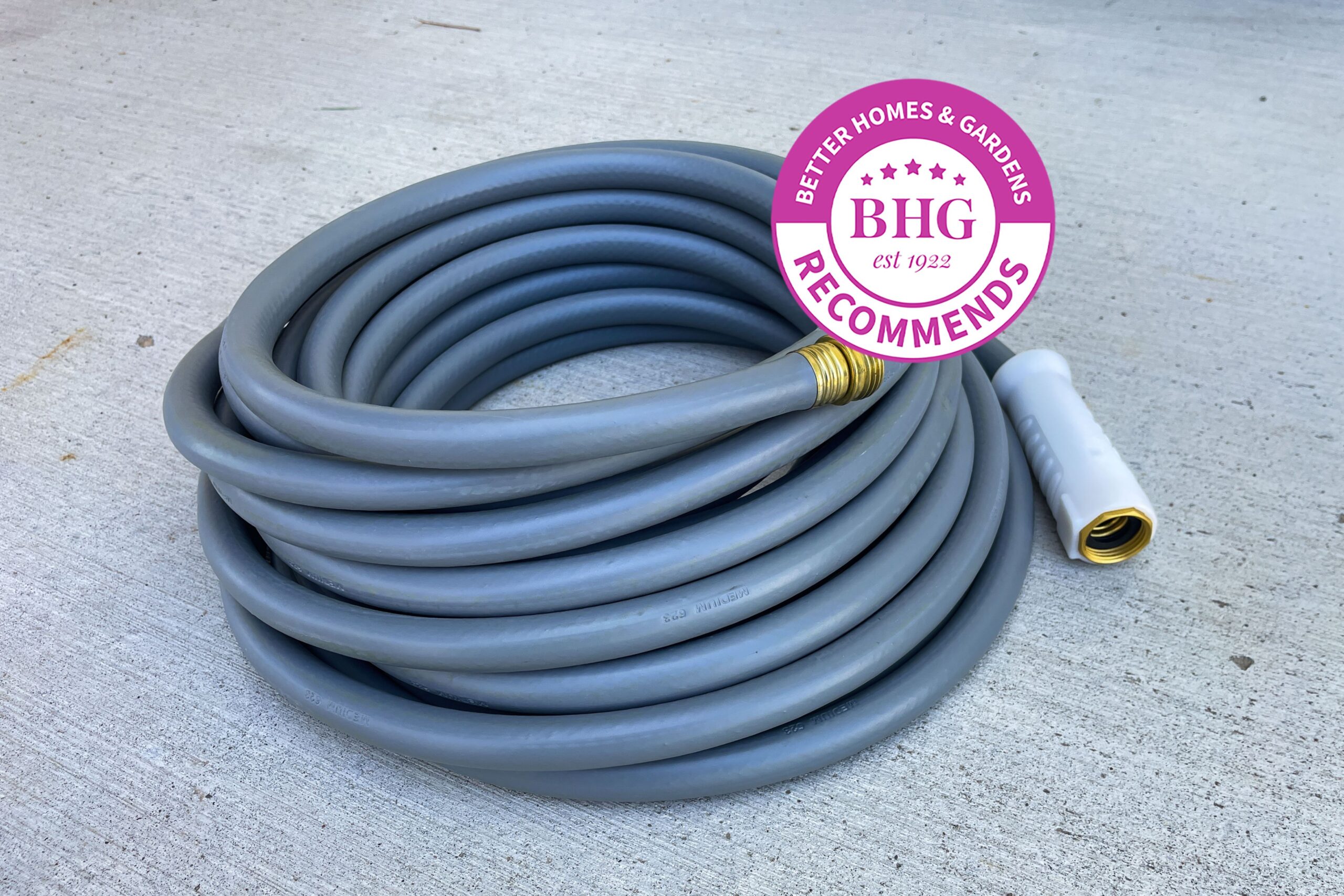
What Is BHG Recommends?
Next to all of the products on this list, you may have noticed our BHG Recommends seal of approval. Products that earn the seal have been put through rigorous testing to make sure they’re worth a spot in your home. We buy most of the products we test ourselves, but occasionally we are provided samples by companies if buying isn’t an option. In these cases, we use the same testing criteria we use to test the purchased products.