

Rhododendrons bloom at Heritage Museums and Gardens in Sandwich. Video
Heather Mead, chief program officer at Heritage Museums and Gardens, describes one of the Dexter variety rhododendrons found on the grounds.
- Shrubs and trees can be planted when the ground is not frozen, but should be covered with sheets or frost cloth during hard frosts.
- Slow-release fertilizers can be used once or twice during the growing season to provide a constant supply of nutrients to plants.
Anxiety is the word I use to best describe the anticipation and enthusiasm of gardeners who visit me at the local greenhouse and nursery where I work again this year.
I cannot count the number of people who are chomping at the bit to plant their tomatoes! While our local “frost day” in this area is around May 15 (an approximate 10% chance of a killing frost after this date), the warmer weather has people trying to push that date so they can get their veggies and spring flowers in the ground now. Here are some actual questions posed by some of these anxious gardeners.
Dear Doug – I know it may be too early to plant my spring flowers, but can I plant perennial bushes and trees now? I cannot wait to use my new shovel and garden utensils that I got for Christmas! – Signed: Ready to Go!
Dear Ready to Go – Good news! You can safely plant shrubs and trees now! The general rule is that, provided the ground is not frozen, it is safe to plant these hardier plants now. Be aware, however, if a hard frost is predicted, it is best to cover your plants using sheets or frost cloth, not plastic. Plastic will not provide adequate protection. Dig in!
Hi Doug – I have just begun fertilizing my shrubs and perennials that I planted several years ago. It’s frustrating that, to keep my plants healthy, I must fertilize every couple of weeks or every month. Is there any type of fertilizer that will produce the same results but not require me to fertilize so frequently? Signed: Frequent Fertilizer.
Dear Frequent Fertilizer – One of the best fertilizing strategies is to use a slow-release fertilizer that you will only need to apply once or twice during the growing season. While there are various types of slow-release fertilizers, many contain granular material with coatings that disintegrate over time due to temperature, or dissolve as they are exposed to water. Most contain fertilizer that begins to work immediately; then, as the growing season progresses, additional fertilizer is released so your plants receive a constant supply of nutrients. My only caution is not to apply a slow-release fertilizer to shrubs or trees late in the growing season when these plants are preparing for dormancy. If your plants continue to grow when they should be hardening for winter, excessive winter damage can occur.
Dear Doug – I am a huge fan of pollinators, with hummingbirds being my very favorite. I have several hummingbird feeders positioned around my deck, but would like to plant some flowers that would attract hummingbirds during the entire growing season. Could you please recommend some flowers that would help me celebrate my favorite pollinator all season long? Signed: Ruby.
Dear Ruby – There are plenty of flowers that will fulfill your request. Usually, any flower that boasts a cone-shaped flower is attractive to hummingbirds. Here are a few of my favorites, including which part of the growing season in which they flourish. For early-season bloom, you cannot go wrong with Columbine (Aquilegia spp.), Wild Geraniums (Geranium maculatum), and Golden Alexanders (Zizia aurea). Good mid-season bloom choices include Scarlet Bee Balm (Monarda didyma), Wild Bergamot (Monarda fistulosa), and Blazing Star (Liatris spicata). Some of my late-bloom season favorites include Zig Zag Goldenrod (Solidago flexicaulis), New England Asters (Symphyotrichum novae-angliae), and White Turtleheads (Chelone glabra).
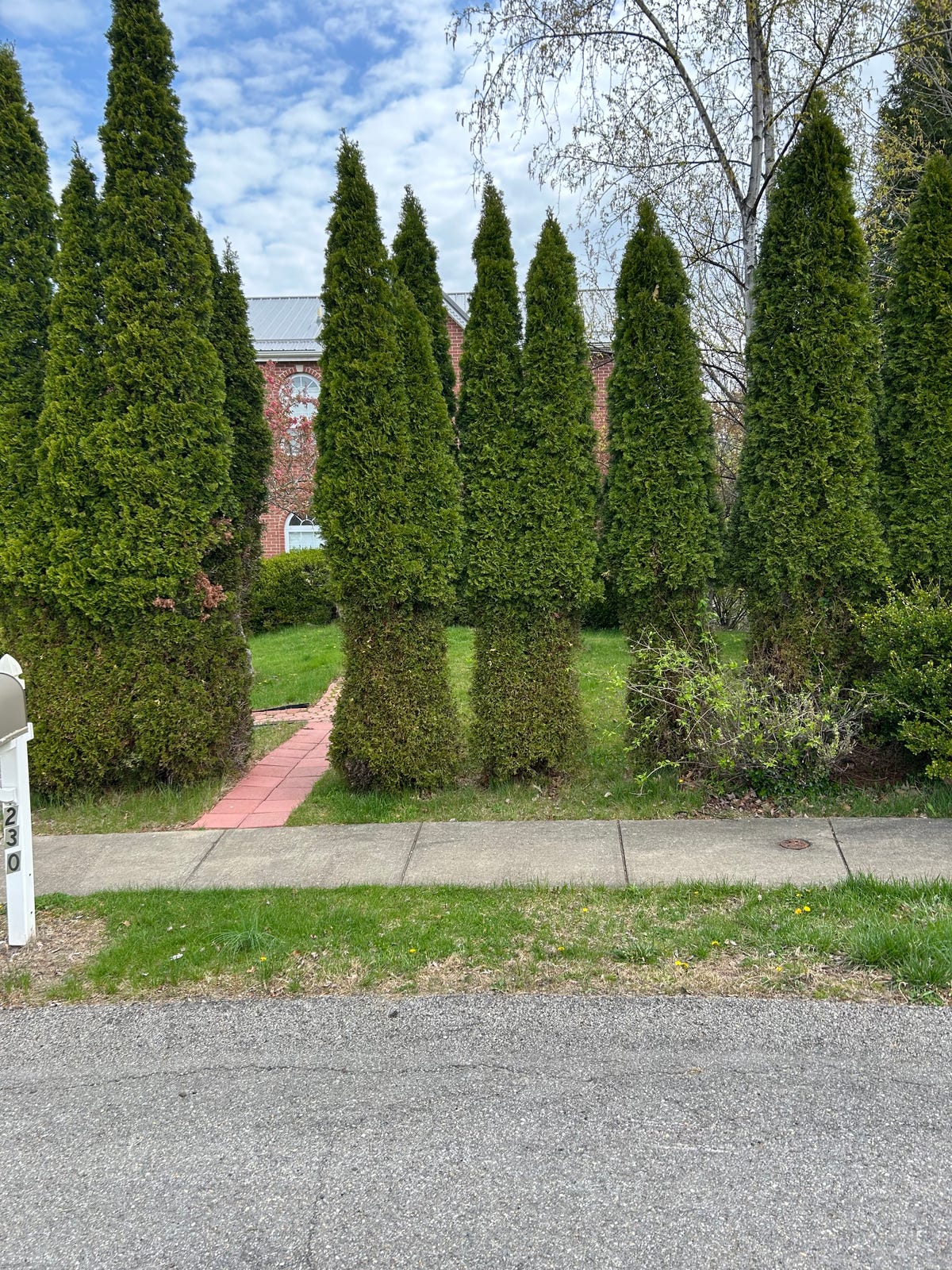
Hi Doug – To say I am disgusted with what happened to my Green Giant Arborvitae (Thuja standishii x plicata) over the past winter would be an understatement. I was told they were the most deer-resistant arborvitae I could purchase for my privacy fence, but evidently, my deer felt differently. Almost all my green giants now look like an open umbrella! So, what is the story about shrubs and trees that are supposedly deer-resistant? Signed: Disgusted.
Dear Disgusted – To begin with, no plant should be considered deer-proof. If conditions dictate, such as long, frigid winter spells or high snow, deer will browse or eat almost any plant. Many horticulturists now list plants as “deer non-preferred” as opposed to “deer-resistant.” While many technical references list your Green Giant Arborvitae as “deer-resistant,” it is a tree that deer will normally shy away from in search of more palatable species. When someone tells me they are looking for fast-growing evergreens such as arborvitae in a setting that includes deer, I recommend using a deer-repellent spray or selecting another evergreen. Once green giants look like an open umbrella, it is unlikely that they will regrow to their original form.
Dear Doug – This year I have decided to tackle my problem hillside once and for all. It has been overrun with weeds, and I have absolutely had it! My hillside is not that big, and I am a fan of pretty groundcovers. I have started searching local nurseries and have seen so many that my mind is spinning! My hillside usually gets morning and early afternoon sun. Can you suggest some groundcovers that will eliminate my eyesore hillside? Signed: Hills Bills.
Dear Hills Bills – You are not alone; this is a frequent problem, especially in our western PA area. Once you clear your hillside of the weeds, here are some examples of groundcovers that you may find acceptable, some of which will add color to your hillside. The Cranesbill Geranium (Geranium sanguineum) is a hardy perennial geranium that will provide purplish flowers throughout most of the growing season. It spreads by self-seeding but not in an invasive manner. Creeping Jenny (Lysimachia nummularia) is a rapidly spreading groundcover with lime-colored leaves. It spreads both by rhizomes under the ground and self-seeding, so expect it to help cover your hillside. Blue Mistflower (Conoclinium coelestinum) is a native perennial wildflower that sports fuzzy blue or violet flowers from late summer until frost. It is also an aggressive spreader that will help make your hillside eye-catching instead of an eyesore! In some cases, it can reach heights of almost three feet, so be aware that the Blue Mistflower is not your typical short groundcover. Bearberry (Arctostaphylos uva-ursi) is a low-growing evergreen native shrub that is slow to grow when first planted, but spreads rapidly once established. It sports glossy, dark green leaves that turn reddish-purple in the fall. It has beautiful red berries that are favorites of wildlife. Bearberry grows well in poor soil. One of my favorites is Bugleweed (Ajuga reptans) which produces flowers on stalks of about six to eight inches during the spring and summer. It spreads rather rapidly via runners and is often successful at choking out weeds. My suggestion is to clear your weeds, then spot-plant several of these plants using a good organic soil mix (not potting soil) in a horizontal position, help your plants to establish with frequent watering, then sit back and watch your hillside grow. Most of these plants are not preferred by rabbits and deer, so even if you have critters in your yard, these plants should be safe.
Well, friends, that’s it for this session. For questions on plants and plantings, feel free to contact our Master Gardener hotline at [email protected] for research-based advice. Time to ensure your wheelbarrow tires are inflated!
Doug Canan, is a Penn State Master Garden in Beaver County.