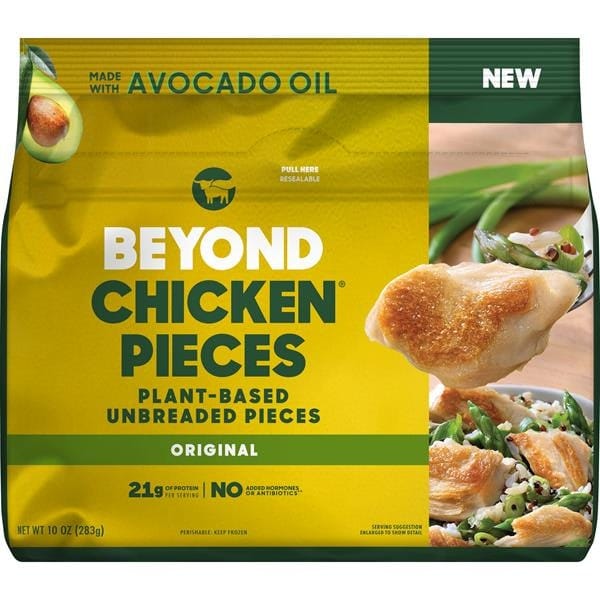
It wasn’t that long ago that the topic of plant-based meat alternatives was a common part of conversations for professionals in the meat and poultry industries.
But those conversations have seemed to slow down. I don’t mean to be rude, but it also appears that business for one major plant-based protein producer, Beyond Meat, has also slowed down. Or at least, business has not kept up with the pace of investment in the company.
Beyond Meat, which is traded on the Nasdaq Exchange under the BYND ticker, recently released its financial results for the quarter ending June 28. In the press release in which those financial figures were announced, so were some changes that are being made at Beyond Meat that indicate all is not well with the company.
For the quarter, Beyond Meat experienced a net loss of US$33.2 million. That figure is slightly better than the year-year ago period, when a net loss $34.5 million was reported. However, net revenues were down year-over-year to $75 million, a drop of 19.6%
Beyond Meat President and CEO Ethan Brown remarked on the most recent quarter: “We are disappointed with our second quarter results, which primarily reflect ongoing softness in the plant-based meat category, particularly in the U.S. retail channel and certain international foodservice markets.”
Will that plan work? The company and the people who enjoy its products hope so.
After looking at the figures for the most recent quarter, which was the second quarter of fiscal year 2025, and the year-ago quarter, I decided to check out the net income or loss for the three interim quarters.
For the first quarter of FY 2025, a net loss of $52.9 million was reported. For the final quarter of FY 2024, a net loss of $44.9 million was reported. For the third quarter of FY 2025, Beyond Meat reported a net loss of $26.6 million.
So at minimum, that’s five consecutive quarters with significant losses. Some people may say Beyond Meat produces sustainable products, but the business plan followed to date definitely is not sustainable.
Adjustments on the way
Brown not only acknowledged that Beyond Meat’s financial performance was disappointing, he also said they were doing something about it.
“We are responding by accelerating our transformation activities, including more rapidly and aggressively reducing our operating expenses to fit anticipated near term revenues; prioritizing increased distribution of our core product lines; and investing in margin expansion initiatives across these core products,” he said.
One significant change being made is a reduction in workforce (RIF), which was approved by management on August 6. Under this plan, 44 employees – or about 6% of the total global workforce – will have their jobs eliminated. In describing this decision, the company said it was based on “cost-reduction initiatives intended to reduce cost of goods sold and operating expenses.”
Another August 6 decision made by the company’s management was that John Boken was appointed as Beyond Meat’s chief transformation officer. Boken has been a partner and managing director in the Turnaround and Restructuring Services practice at AlixPartners, LLP, an international consultancy firm, for over 6 years and has over 35 years of interim management, corporate turnaround and restructuring experience.
And while related information was not included in the press release, numerous media outlets have reported that Brown said the company will drop the word “meat” from its name and will simply be referred to as “Beyond.” A blog post written Merdith Dawson, a colleague of mine, offers more insight into that.
What’s the state of the industry?
Brown’s reference to “ongoing softness in the plant-based meat category,” is something worth paying attention. Is that a greater trend or one unique to Beyond Meat?
Since Beyond Meat’s closest competitor, Impossible Foods, is not a public company, finding out about its financial performance is difficult.
But there are others, too.
Within the past six or seven years, many of the biggest players in the meat and poultry industry have announced they were entering the plant based protein sector: JBS, Tyson Foods, Marfrig Global Foods, Hormel Foods, Cargill, Maple Leaf Foods, Smithfield Foods, Plukon Food Group and Danish Crown are some that come to mind.
However, aside from Maple Leaf Foods, you don’t really hear much about those initiatives and how they are doing.
And even in Maple Leaf’s case, the information shared is less than it used to be. The Canada-based company used to have its plant-based proteins in its own reportable segment, but it has since become part of its prepared foods business segment, which saw its sales increase by 7.5% in the most recent quarter.
However, Maple Leaf’s prepared foods segment also includes some animal-based protein products. With that in mind, it’s tricky to tell how much of the segment’s successes or failures are attributable to meat protein and how much are attributable to the plant-based protein.
Maybe the new has worn off and plant-based meat alternatives will continue to see declining sales. I don’t see it going away entirely, but the latest news from Beyond Meat and relative lack of news from other plant-based protein producers is something we can’t ignore.