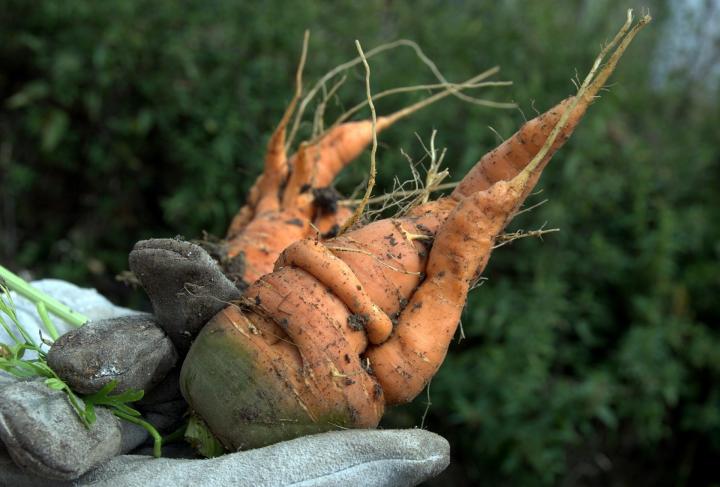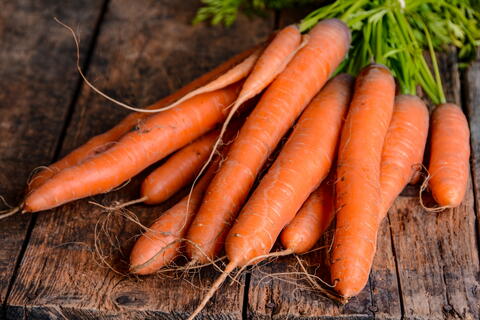
Ever pulled a funky-shaped carrot out of the ground and loved it anyway? That’s the charm of homegrown carrots—quirky, colorful, and way sweeter than store-bought! With just the right soil (yes, that’s the secret), you can grow juicy, crunchy carrots in all shapes and shades. Whether you’re dreaming of classic orange or curious about purple or round varieties, here’s how to make your carrot patch thrive from seed to harvest.
About Carrots
The carrot (Daucus carota ssp. sativus) is a root vegetable in the Umbelliferae family. Today’s cultivars are all domesticated forms of the wild carrot, Daucus carota, native to Europe and Southwestern Asia. The wild carrot has a more woody texture and is less palatable. They have a long history, dating from 3000 B.C. The orange carrot is relatively new to gardens and kitchens: It first appeared in the Netherlands in the 17th century. Carrots did not become popular in the United States until after World War I, when soldiers returning from Europe brought seeds and stories of having eaten and enjoyed them.
The colorful roots are usually orange, but there are also heirloom cultivars that come in purple, black, red, white, and yellow hues. Eaten raw or cooked, carrots are an excellent source of vitamins A, K, and B6 and also contain large quantities of beta-carotene and nutrients. The stems and leaves are rarely eaten, though they are edible.
Carrots grown in the garden taste more flavorful, fresher, and juicier because the sugar that makes a carrot sweet begins to be replaced by fiber as it ages in grocery stores. Another reason to grow carrots in the garden is that there are so many more varieties to try, from Belgian whites to Purple Dragon to Parisian heirlooms that are round!
Don’t expect to get perfectly straight “grocery store” carrots in the garden, especially if your soil isn’t loose, well-draining, and sandy or loamy. Your carrots will still taste better, whatever their shape!