What to consider when buying a fitness tracker
It’s important to choose an activity tracker or fitness watch that’s right for you and your lifestyle. Perhaps you’re a keen runner and built-in GPS is a priority. You may want a waterproof watch to track your swims. Or maybe you just want something stylish that won’t look out of place in the office, while keeping an eye on your activity levels.
Before you buy, think about which features are important to you. Here are the main ones to consider.
Fitness tracking
Many trackers allow you to record different workouts, with the number of options ranging from 10 activities to as many as 150 different types of exercise. Most trackers will allow you to record walking, running (both indoors and outdoors) and cycling, while others monitor everything from swimming and yoga to circuit and interval training.
GPS
While some devices come with built-in GPS, more basic models often rely on an accelerometer, which can quickly become inaccurate. Having a GPS chip improves location accuracy, elevation and distance, so you can map your running and walking routes more accurately.
Sleep tracking
Sleep tracking capabilities vary between devices. Some just total up the number of hours you’re getting, while others break this down into heavy, light and rapid eye movement (REM) sleep. Some also provide a score for the quality of your sleep and offer tips on how to improve it.
Heart rate sensor
Heart-rate monitors can provide more accurate calorie burn data and some will indicate the zone your heart rate is in. This information can be useful if you’re training for a specific purpose, such as weight loss or to improve your cardiovascular endurance.
Waterproofing
All fitness trackers are sweat-proof and many are also waterproof, meaning they can be worn when you’re in the shower or when swimming. If you swim several regularly, look out for a fitness tracker that will monitor your pool sessions, including the number of lengths you swim, as well as the time you’re active and the calories you burn.
Third-party apps
If you’re already using a smartphone app such as Strava to track your exercise sessions, look for a fitness tracker that’s compatible with your favourite app. This means you can leave your smartphone behind if you wish, safe in the knowledge that you’ll still be able to import your data – the wearable will continue to log your steps, distance and calorie burn and will automatically update your phone app once you reconnect it via Bluetooth.
Battery life
How long your fitness tracker lasts between charges depends on the number of sensors you use and how often your screen is displaying information. Many models in our round-up last for more than seven days on a single charge, with some taking even longer to run flat.
Smartphone notifications
The majority of fitness trackers and watches can be synced with your smartphone to ping or vibrate when you get a call, message or other notification.
” data-next-head/>
We earn a commission for products purchased through some links in this article.
How we test
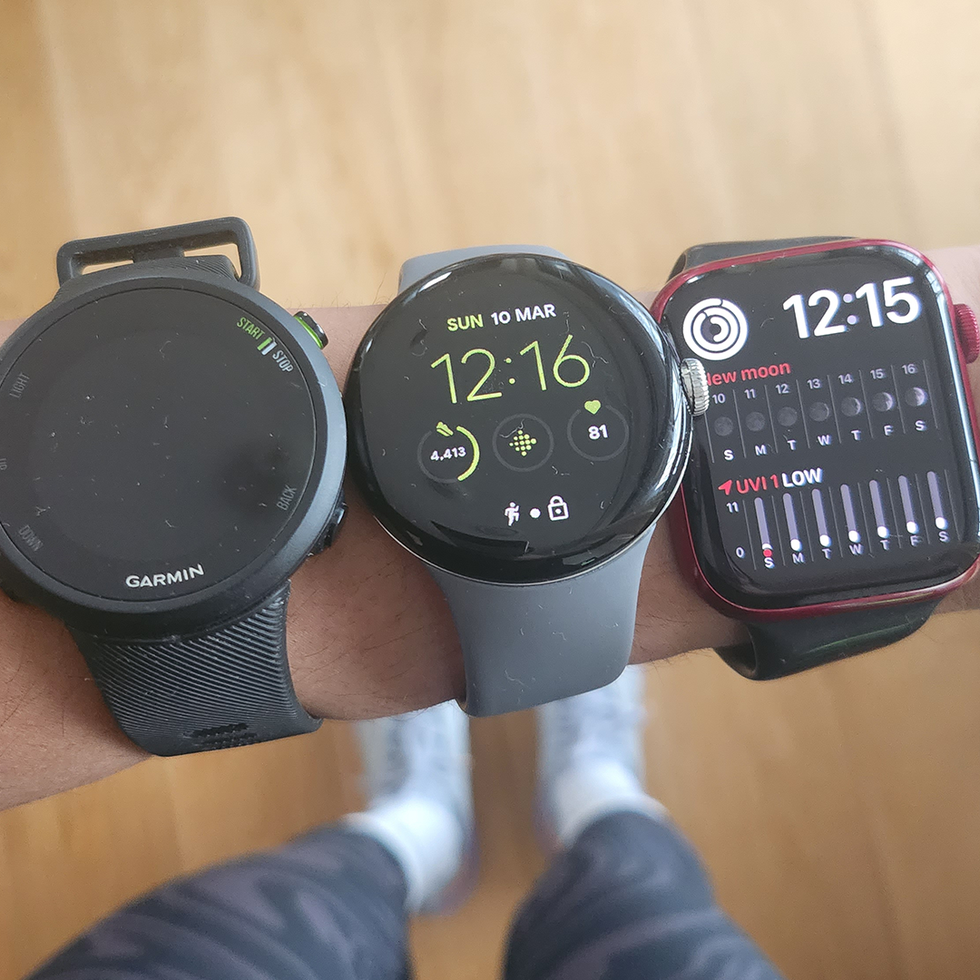
The Good Housekeeping Institute has tested over 60 leading fitness watches to bring you the best for all needs and budgets. The wearables were judged on ease of use, design and overall performance. We wore each model for a range of activities, from running to gym sessions, and checked out key functions such as sleep tracking and heart rate monitoring.
We tested how accurate they were when counting the steps and logging distance travelled, and we also noted how long the battery lasted. Further points were awarded for comfort, practicality and aesthetics.


Pros
- Highly accurate dual GPS
- Fast charge time
- Detailed workout insights

Cons
- Bulky design

Score: 96/100
Not sure whether to go for the classic Apple Watch Series 10 or this latest iteration of the hardy Watch Ultra? Well, thanks to its rugged design, super-accurate GPS and downloadable maps, we think this one is best suited to outdoorsy types and dedicated fitness fanatics.
It has all the tracking features you’d expect, including heart rate, calories burned, step count, blood oxygen levels and more. We particularly liked the training load feature, which reveals the impact your workouts have on your body over time. The screen is bright, responsive, making it easy to read when you’re on the move, and it’s ideal for water-based activities including swimming and snorkelling as the durable design has a depth gauge and can be fully submerged in water up to 100 metres. There’s even a water temperature detector, if you really want to know how cold that ice bath is.
It works while you sleep too, tracking your heart rate, sleep duration and how long you spend in each sleep cycle, helping you establish a consistent sleep schedule and perform at your best. There’s also a handy new sleep apnoea tracking feature, which flags any breathing disturbances.
Plus, while the Series 10 has a slightly lacklustre battery life of up to 36 hours, the Ultra 2 offers up to 72 hours of juice on a single charge. Music to our ears!
Key specifications
| Weight | 61g |
|---|---|
| Screen size | 1.19 inches |
| Works with | iOS |
| Battery life | 36 hours standard, and up to 72 hours in low power mode |
| GPS | Yes |
| Water resistant | Yes, waterproof up to 100m |

Score: 91/100
There was a lot of buzz around the Apple Watch Series 10 review, and after testing it, we can see why. This watch boasts an array of exciting new features, including a larger, brighter screen, a more powerful processor and enhanced health sensors.
Our expert praised the design, which is slimmer and lighter than the Series 9, saying it felt extremely comfortable to wear for hours on end. They found the GPS accuracy was excellent in both cities and forests, and the heart rate and blood oxygen level readings were also spot on when tested against third-party devices.
In terms of health and fitness tracking, there’s a new Vitals app, which monitors five key metrics overnight (including heart rate, sleep duration and wrist temperature) and lets you know if there are any deviations from the norm. It also provides FDA-approved sleep apnea detection and a training load score to help you gauge if you’re exercising at the right intensity and frequency.
The battery life is still a little disappointing, but the Series 10 does offer faster charging, promising an 80% charge in just 30 minutes. The price point is punchy, but for dedicated Apple users, it offers a seamless smartwatch experience like no other. It’s slick, responsive and its cellular tech means you can pretty much run your life from your wrist.
Key specifications
| Weight | 34.4g for 42mm size, 41.7g for 45mm size |
|---|---|
| Screen size | 1.9inch for 42mm size, 2.04inch for the 45mm size |
| Works with | iOS |
| Battery life | 18 hours (36 hours in low power mode) |
| GPS | Yes |
| Water resistant | Up to 50 metres |

Cons
- Lacks GPS
Score: 87/100
Seen on the wrists of top athletes and celebrities including Michael Phelps, Vogue Williams and even Prince William, Whoop is one of the hottest wearables on the market. And after testing it, we understand the hype.
It has an unobtrusive, screen-free design, making it a good choice if you don’t want endless notifications flashing up while you’re trying to get on with your day. According to our expert, the fabric band is supremely comfy – you’ll barely notice you have it on.
It tracks a range of metrics – including heart rate, heart rate variability (the fluctuation in time between heart beats), skin temperature and blood oxygen levels – and provides personalised insights to help improve your overall health and wellbeing.
In the user-friendly Whoop app, you’re presented with daily scores based on the three key areas: sleep, strain (how much physical and mental stress you’re putting your body under) and recovery (how prepared your body is to perform). Our expert found the data easy to interpret and appreciated the holistic recommendations – Whoop will let you know when to take it easy and when your body is up for a challenge.
It can last up to five days (five!) on a full charge, and has a handy wireless battery pack, so you never have to worry about forgetting to charge it. Note, Whoop uses a subscription model – you have to sign up for at least six months at £27 per month (the price decreases if you subscribe for longer). Not sure if it’s right for you? The brand offers a free month trial, so you can send it back if you’re not impressed (although we think you might be).
Key specifications
| Screen size | N/A |
|---|---|
| Works with | Apple, Android |
| Battery life | Up to 5 days |
| GPS | No |
| Water resistant | Up to 10 metres |

Score: 86/100
With Olympian brand ambassadors Eliud Kipchoge and Eilish McColgan, we had high hopes when the Coros Pace 3 arrived in our lab, and it didn’t disappoint.
The lightweight, comfy watch is brimming with features found on pricier models. We’re talking dual-frequency GPS for greater accuracy, custom routes and turn-by-turn navigation, plus exceptional battery life — over two weeks of normal daily use and up to 38 hours of GPS time.
Our expert was impressed with the breadth of data available on the watch itself and via the user-friendly Coros app. Here, you can find a breakdown of your exercise performance, training load, sleep and recovery, with easy-to-interpret colour-coded graphs. It even measures your heart rate variability (the time between each heartbeat), highlighting any deviations from the norm and identifying when you need to take it easy.
There are built-in training plans and workouts, as well as the option to connect to third-party apps like Strava and Apple Health. Though it stands out for its running and cycling features, there are countless sports modes to choose from, including swimming, strength training and hiking.
We liked navigating the menu using the touchscreen or buttons on the side, however we found the screen a tad dull. While it does offer music support for phone-free exercising, music must be downloaded onto the watch via MP3 files – you can’t use apps like Spotify. It’s also worth noting that the strap feels a tad basic and plasticky, but that was our only major quibble.
Key specifications
| Weight | 30g |
|---|---|
| Screen size | 1.2inch |
| Works with | iOS, Android |
| Battery life | Up to 15 days regular use, up to 38 hours in GPS mode |
| GPS | Yes |
| Waterproof | Up to 50 metres |

Cons
- Limited third-party app support
Score: 83/100
A fitness watch isn’t just about functionality – you want something that will look good too. Enter this attractive new Huawei model, which has an elegant pendant design, a sleek strap and over 25,000 watch faces to choose from.
Aesthetics aside, the iOs and Android-compatible wearable is brimming with features to help you reach your health and fitness goals. It offers everything from workout modes (no fewer than 100), heart rate monitoring and SpO2 readings, to in-depth sleep analysis, stress management and exercise plans. It also has smart menstrual cycle and fertility tracking, with personalised predictions based on physiological indicators such as body temperature and breathing rate.
The huge 14-day battery life means you don’t have to carry a charger around with you, the AMOLED screen is crystal clear, responsive and easy to read on the move, and the Huawei Health app is a pleasure to navigate and use. Its GPS also proved extremely accurate during testing.
Third-party app support is limited – Google Maps, Spotify and Apple Pay are a no-go – but that may or may not bother you.
Key specifications
| Weight | 37g |
|---|---|
| Screen size | 1.3inch |
| Works with | Android, iOS |
| Battery life | Up to 7 days |
| GPS | Yes |
| Water resistant | Yes |

Score: 83/100
A departure from Garmin’s traditional rugged style, the Vivomove Trend is part of the brand’s hybrid collection – combining classic analogue style with smartwatch functionality – and we’re big fans.
Design-wise, the watch is petite and lightweight, it felt comfy to wear and, best of all, it has a hidden touchscreen – just flick your wrist or tap the screen to watch the ticking hands move away so you can see your stats and smart notifications.
The display, which is bright and easy to read, reveals metrics such as heart rate, step count, sleep, stress and blood oxygen levels, and you can access additional features via the Garmin Connect App, including menstrual cycle, hydration and respiration tracking. It also comes with all your usual workout modes, including cardio, strength training, cycling, swimming and running. Just note that it doesn’t have built-in GPS, so you’ll have to tuck your phone into your pocket for GPS support. We would have liked to see more data on the in-workout screen, but you easily review these in the app after your session.
The Vivomove Trend is the very first Garmin model to offer wireless charging – no need to scramble around looking for a lead – plus a quick 15-minute charge will give you up to 24 hours of battery.
If you’re after a stylish office-to-gym model, this is your perfect match.
Key specifications
| Weight | 43.3g |
|---|---|
| Screen size | 1.01inch |
| Works with | Android, iOS |
| Battery life | 3-5 days |
| GPS | Yes |
| Water resistant | Up to 50 metres |

Score: 82/100
The Samsung Watch 7 isn’t reinventing the wheel, but there are some exciting new features that make it a worthwhile buy. We’re talking AI-powered wellness tools, precise dual-band GPS and an upgraded BioActive sensor for more detailed sleep tracking. It’s even FDA authorised for sleep apnea detection, and it provides a useful ‘energy score’, which analyses your metrics to rate your physical and mental readiness for the day.
Our expert said the sleek circular design was a pleasure to wear and surprisingly innovative to use. They particularly liked the ‘double-pinch gesture’, which allows you to control it one-handed – ideal when your hands are full and you’re on the go.
It proved extremely accurate when it came to activity tracking, sleep monitoring and health insights, including heart rate and blood oxygen levels, plus the GPS worked well in both built-up areas and shady forests.
Like many smartwatches, the battery life isn’t the best – our expert found it lasted around a day when tracking their workouts and sleep – but when you consider the super AMOLED touchscreen, speedy processor and in-depth health and fitness tracking capabilities, it’s a winner for dedicated Samsung users.
Key specifications
| Weight | 44mm: 33.8g; 40m: 28.9g |
|---|---|
| Screen size | 44mm: 1.5inch; 40m: 1.3inch |
| Works with | Android |
| Battery life: | Up to 40 hours |
| GPS | Yes |
| Water resistant | Up to 50 metres |
Cons
- Could be more responsive
- Lacking buttons
Score: 82/100
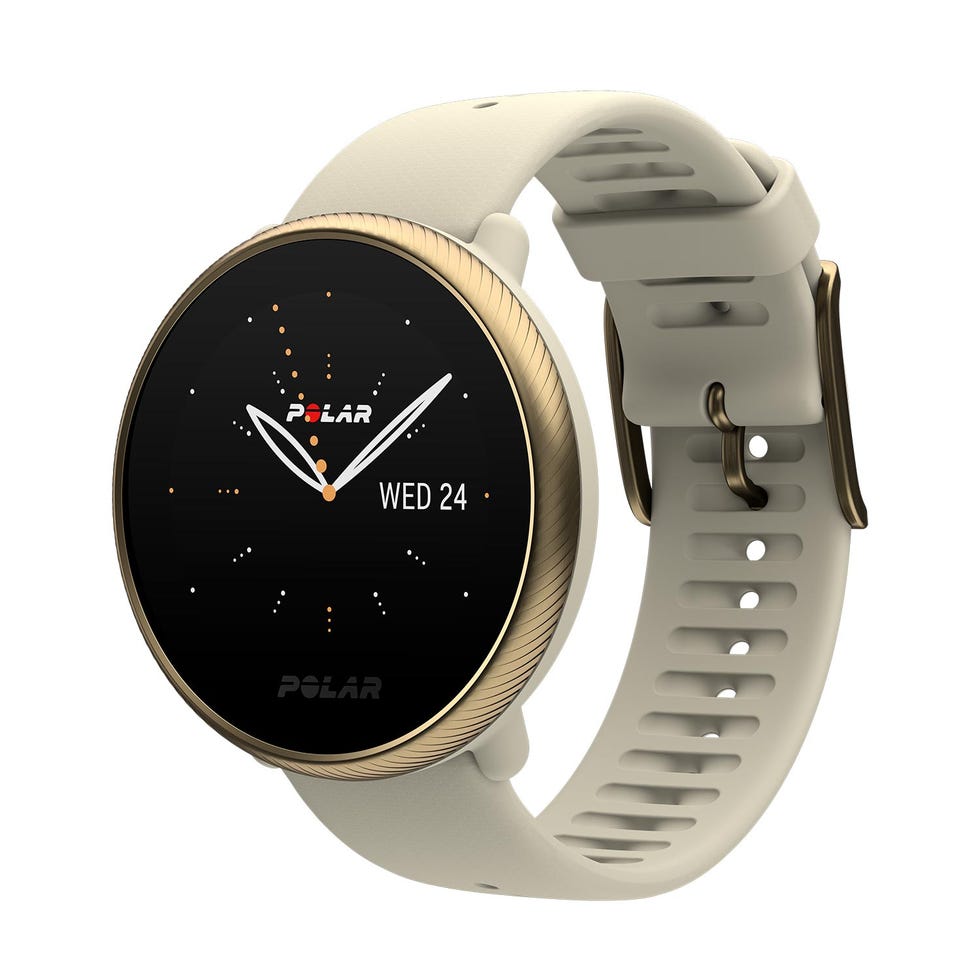
There’s a lot to love about this sleek and stylish fitness tracker. It manages to pair precision and performance with simplicity, proving surprisingly easy to set up thanks to its clear instructions.
The GPS tracking was accurate and it provided a detailed breakdown of our heart rate zones during exercise – our favourite feature – showing our work rate in each session. It is very similar to the original Polar Ignite, but the brand says the Ignite 2 has a slightly longer battery life in training mode. Like the original, it can track an impressive 130 different activities, but we found it often didn’t detect when we started exercising.
The watch itself feels lightweight to wear and the comfortable rubber strap didn’t rub at all during workouts. However, the touch screen can be difficult to see while running. It also wasn’t very responsive, sometimes lagging behind or failing to recognise our commands.
Key specifications
| Weight | 35g |
|---|---|
| Screen size | 1.7inch |
| Works with | iOS, Android |
| Battery life | Up to 5 days |
| GPS | Yes |
| Water resistant | Yes |

Score: 81/100
Been lusting after an Apple Watch but can’t justify the spend? Check out Huawei’s Watch Fit 3 – which looks remarkably similar with a sleek square design, rotating crown for easy scrolling and a responsive button, but comes in at under £150.
The bright, easy-to-read OLED screen was a big hit with our expert, who thought it was ideal for glasses wearers, and was impressed with how light and comfortable it was. It certainly won’t feel cumbersome or get in the way, whether you’re running, snoozing or in the gym. On that note, this dedicated fitness watch offers built-in GPS, 100 sports modes (including swimming) and can monitor heaps of health and sleep data, including heart rate and blood oxygen – all available to review in the accompanying health app. Our tester found sleep tracking and HR readings hit and miss, but they said the app was a cinch to navigate.
It boasts a lengthy 10-day battery life and it’s compatible with both Android and Apple phones (which is seldom the case with Android devices) – although some features, such as downloading music and sending text replies, are only available on Android. If you have a more modest budget, it’s a reliable pick.
Key specifications
| Weight | 26g |
|---|---|
| Screen size | 1.82inch |
| Works with | Android, iOS |
| Battery life | Up to 10 days |

Score: 80/100
Not your bog-standard smartwatch, Huawei’s Watch D is the first of its kind to provide 24-hour ambulatory blood pressure monitoring (AMBP). It captures blood pressure fluctuations throughout the day and can take readings overnight almost silently, without disturbing sleep. An extremely convenient alternative to traditional cuffs, which are noisy and bulky, it can help detect signs of hypertension and highlight fluctuations that may need medical attention. Clever, huh?
Beyond cutting-edge blood pressure monitoring, our expert liked the Health Glance feature, which reveals six key health metrics – including heart rate, blood oxygen, stress levels, skin temperature, breathing awareness and sleep monitoring – with a single tap. There are no less than 80 different activity modes to track your exercise along with on-board GPS, which our expert found to be accurate.
Though on the bulkier side, the large, AMOLED screen allows for enhanced readability and the strap is soft and comfortable to wear throughout the night. Other plus points include the lengthy battery life (up to six days), calling capabilities and the ability to share health data with friends and family via the Huawei Health app.
If you want to take control of your wellbeing and work on your long-term health outcomes, then this innovative offering is seriously worth considering.
Key specifications
| Weight | 40g |
|---|---|
| Screen size | 1.64inch |
| Works with | Android, iOS |
| Battery life | Up to 7 days |
| GPS | Yes |
| Water resistant | Up to 50 metres |

Score: 77/100
When it comes to value for money, this fuss-free design is hard to beat. For under £70, you get over 120 workout modes (with automatic detection for seven activities), built-in GPS, continuous heart rate monitoring and blood oxygen readings, as well as in-depth sleep, stress and menstrual cycle tracking.
The Bip 5 also has third party integration with apps such as Apple Health and Strava and includes basic smart functions like email notifications, alarms, to-do lists and weather reports. There’s no contactless payments or streaming apps, but you can take calls from your wrist.
Our tester was really impressed with the sleek tracker, praising the clear, responsive touchscreen and lightweight design. It wasn’t bulky and didn’t get in the way during workouts. It scored highly for accuracy in terms of step count, distance, heart rate and SP02 readings, and the accompanying Zepp app was easy to set up and use.
Admittedly, the Bip 3 Pro doesn’t feel quite as premium as the more expensive models on this list, and it lacks some bells and whistles, but that’s hardly a dealbreaker given the price.
Key specifications
| Weight | 26g |
|---|---|
| Screen size | 1.91inch |
| Works with | Android, iOS |
| Battery life | Up to 10 days |
| GPS | Yes |
| Water resistance | Up to 50 metres |
Score: 74/100
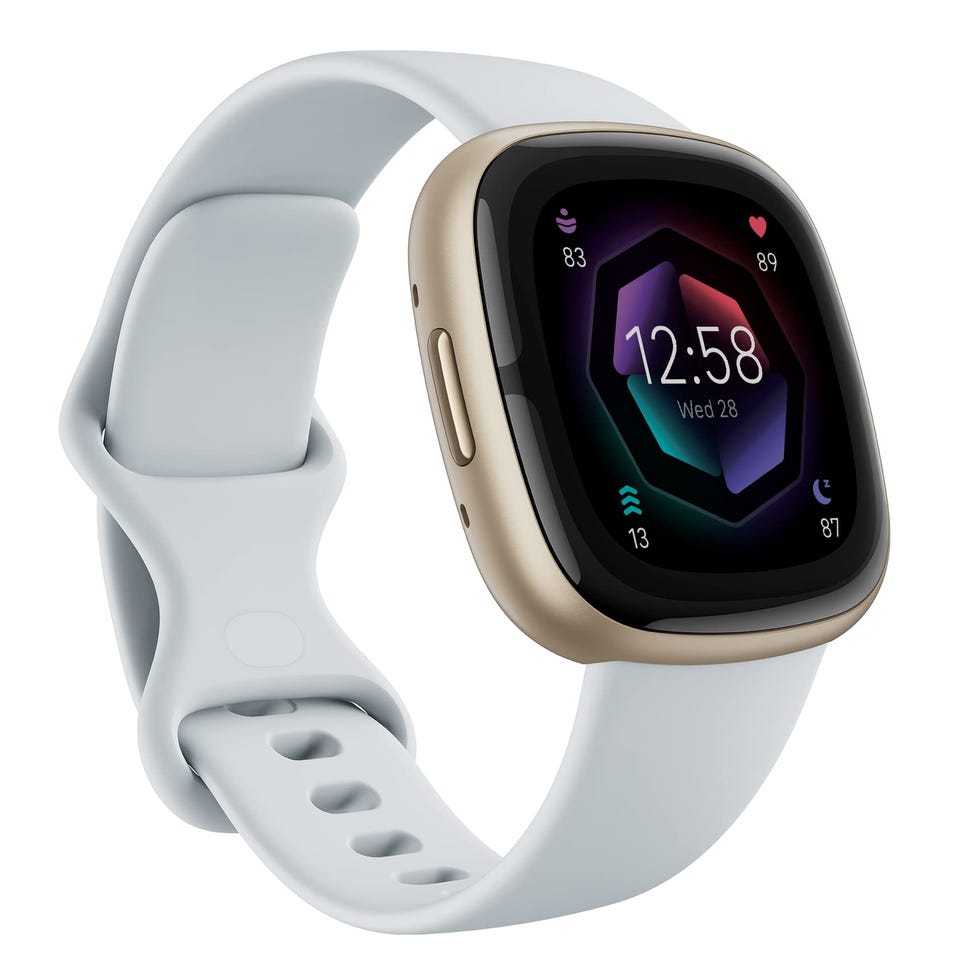
The Fitbit Sense 2 stands out from the crowd for its revolutionary wellbeing and stress tracking functionality. It has a continuous cEDA sensor, which tracks electrodermal activity in your skin and will ping you when it senses your body is under stress. Our tester raved about the mindful breathing sessions, daily stress management scores and the option to log your feelings, saying they were more mindful of their mental health when wearing the watch.
It also monitors your heart rate, blood oxygen levels, skin temperature and sleep, using the data to provide a ‘daily readiness score’ that lets you know whether your body can handle intense exercise, or if you should prioritise rest. If you are ready to push yourself, there are 41 exercise modes, from yoga to gymnastics, with detailed data screens and heart rate zone tracking. We particularly liked the active zone minutes, which tell you when you’ve reached your weekly goal.
Though it has a built-in microphone and speakers so you can make and receive calls, you can’t access any third-party apps, there’s no music playback or WiFi, and you can’t use Google Assistant. On the plus side, you get up to six days of battery life on a single charge and there’s a fast-charge feature.
Key specifications
| Weight | 37.6g |
|---|---|
| Screen size | 1.1inch |
| Works with | Android, iOS |
| Battery life | Up to 3 days |
| GPS | Yes |
| Water resistant | Up to 50 metres |

Cons
- Short battery life
- £7.99 monthly premium Fitbit subscription
Score: 74/100
Android users looking for a sleek, simple wearable, should consider Google’s second-generation smartwatch. It looks more like a classic timepiece than a tracker, with a glossy pebble-shaped face and subtle silicone strap.
Our experts praised the crystal-clear, responsive AMOLED display and rated the smooth digital crown for scrolling through apps. On that note, you can access all Google’s services, including Gmail, Calendar, Google Maps and Google Assistant from your wrist.
The Pixel Watch boasts Fitbit’s health and fitness tracking features, with 40 workout modes, sleep stages, menstrual tracking, plus health metrics including breathing rate, HR viability, heart rate zones, and basics such as step count, calorie burn. Unlike the original Pixel watch, it also has a skin temperature sensor for tracking stress and offers automatic workout detection.
With a premium Fitbit subscription (you get six months free with the device, then it’s £7.99 a month), you can unlock extras such as a ‘readiness score’ to let you know whether to push for a personal best or take a rest day, a breakdown of your daily stress levels, mindfulness sessions, workout videos and more.
One downside is the lacklustre battery life – it lasts up to 24 hours– but that’s also the case with many of its smartwatch competitors.
The Pixel Watch 3 is available to buy now – here is our editor’s full Google Pixel Watch 3 review.
Key specifications
| Weight | 31g |
|---|---|
| Screen size | 41mm |
| Works with | Android |
| Battery life | Up to 24 hours |
| GPS | Yes |
| Water resistant | Up to 50 metres |
These also performed well in testing…

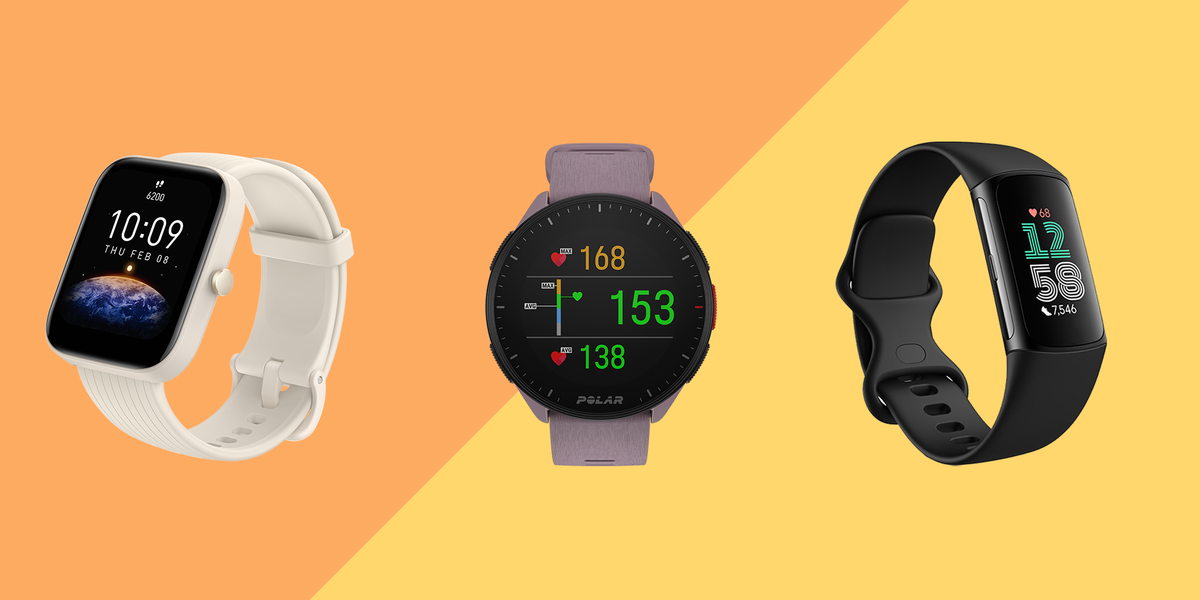
- Polar Pacer, £136.99; Score: 73/100 – new to running and shopping for your first fitness watch? This simple design from Polar will provide all the key data and metrics on your running activity.
- Polar Ignite 3, £199.99; Score: 73/100 – this fitness watch boasts a robust titanium finish – so you can happily wear it during outdoorsy activities, without worrying about scratching or dropping it – and it’s surprisingly lightweight with a comfortable strap to boot.
- Fitbit Charge 6, £139; Score: 72/100 – if you want an easy-to-use fitness tracker for under £150, the new Charge 6 should be on your radar. Access is free for the first six months with the watch, then it’s £7.99 a month.
Final verdict on fitness watches

If you’re a dedicated and active Apple user and are looking to upgrade, the Apple Watch Ultra 2 is your best bet and for Samsung users, the Samsung Galaxy Watch 7 offers a seamless experience.
The Whoop 4.0 is comfy, easy to use and packed with in-depth insights to help you optimise your health, activity levels and wellbeing.
If you’re a keen runner, we recommend the Polar Pacer and if you’re looking for something cheap and cheerful, then the Amazfit Bip 5 offers excellent value for money at under £60.
Why you can trust the Good Housekeeping Institute

The Good Housekeeping Institute’s wellness tester, Kim Hawley, has over 30 years’ experience in the health and fitness industry. She holds a level 4 personal training qualification and a nutrition qualification and has worked in leading health clubs across the UK.
We’ve now tested over 60 fitness watches and counting in our lab, so we know what we’re looking for, and we love testing the latest innovations. We put each and every device through rigorous testing, both in real-world and lab conditions to provide unbiased reviews you can trust.
2 April 2025: This article was updated to reflect the latest prices and check stock levels. We also edited the list down to our top picks to help making finding the best activity tracker or fitness watch simpler.
Priyankaa is our sleep and wellness expert, specialising in expert-tested reviews and roundups on the latest health and fitness products. From walking boots to running machines, Priyankaa has written about hundreds of products and is passionate about providing in-depth, unbiased reviews. Plus, as an avid runner and gymgoer, she knows exactly what to look for when finding the right gymwear, fitness tracker or earphones.
Priyankaa has an MA in Magazine Journalism from Cardiff University and over five years’ experience in health and fitness journalism. Priyankaa has written for Stylist’s Strong Women Training Club, where she regularly wrote about diversity in the fitness industry, nutrition tips, training advice and her experience completing various fitness challenges. She has also written for a variety of publications including Business Insider, Glamour, Bustle, Metro, HuffPost UK, gal-dem and more. Outside of work, Priyankaa can usually be found trying out a new gym class, seeking out London’s best eats or watching a Spanish TV show in a bid to keep up her language skills.
Madeleine is our Lifestyle Writer, specialising in expert-tested reviews and round-ups on the latest beauty Beauty and Health & Wellness products. From skincare to protein powders, Maddie is committed to providing honest and helpful reviews to help guide readers to the best product for them. Maddie has a BA in English Literature and Language, which stemmed from her lifelong interest in reading and writing. She started her post graduate life at Hearst UK within a marketing capacity, which quickly turned into a desire to fulfil a writing career.
When she is not writing about the latest expert reviewed products, you can find her rifling through vintage shops or car boots, reading a print magazine, or capturing portraits on her film camera.
Kim Hawley is our health and fitness product tester. Her career in fitness has spanned over 30 years. Prior to joining the Good Housekeeping Institute, she worked as a personal trainer, writer and fitness instructor for some of London’s most prestigious health clubs, including The Harbour Club, David Lloyd and The Chelsea Club. Passionate about women’s health and fitness, especially in pre/post menopause, she is also a Level 4 PT and holds a professional nutritional qualification. Kim is responsible for rigorously testing everything from cross trainers to smart watches.

Yanar was our former health and wellness tester.
Watch Next

Advertisement – Continue Reading Below
Advertisement – Continue Reading Below
Advertisement – Continue Reading Below