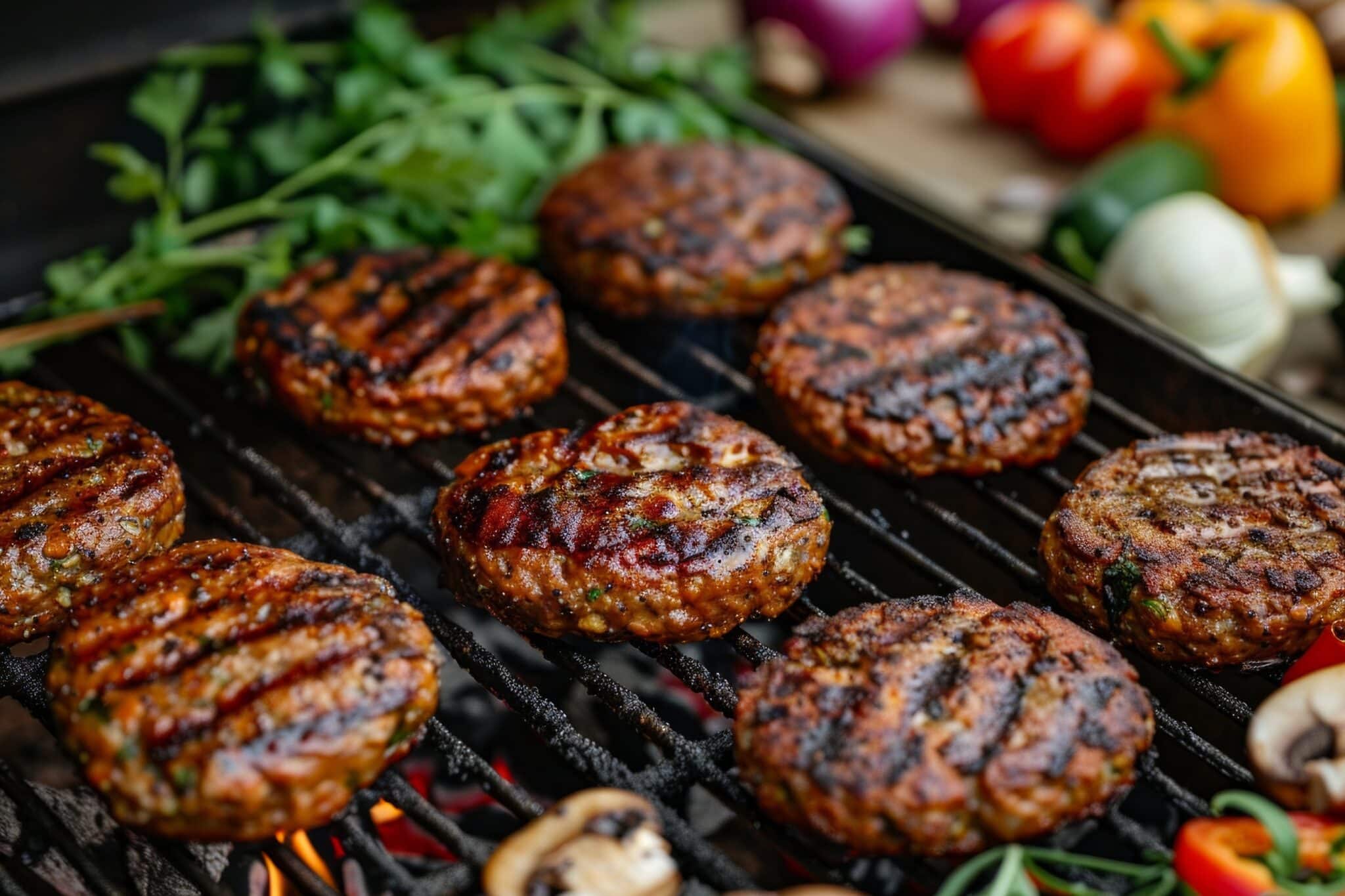

Plant-based burgers on the grill are a healthy and tasty alternative to red meat. (© Anastasiia S – stock.adobe.com)
In A Nutshell
- Men replacing most meat with beans lost more weight, despite reporting higher calorie intake.
- Cholesterol improved in the bean group, though HDL (“good” cholesterol) dropped slightly.
- Waist size shrank only in the bean group, while the meat group’s waist-hip ratio increased.
- Some men already had low B12 and iodine at baseline, but levels worsened slightly on the bean-heavy diet.
HELSINKI — A new clinical trial from Finland suggests that simply swapping most red meat for beans and legumes may lead to more weight loss and better cholesterol levels, even when reported calorie intake was higher. The findings highlight how food choices can matter just as much as calorie counts, though the researchers caution that exercise differences may also explain some of the results.
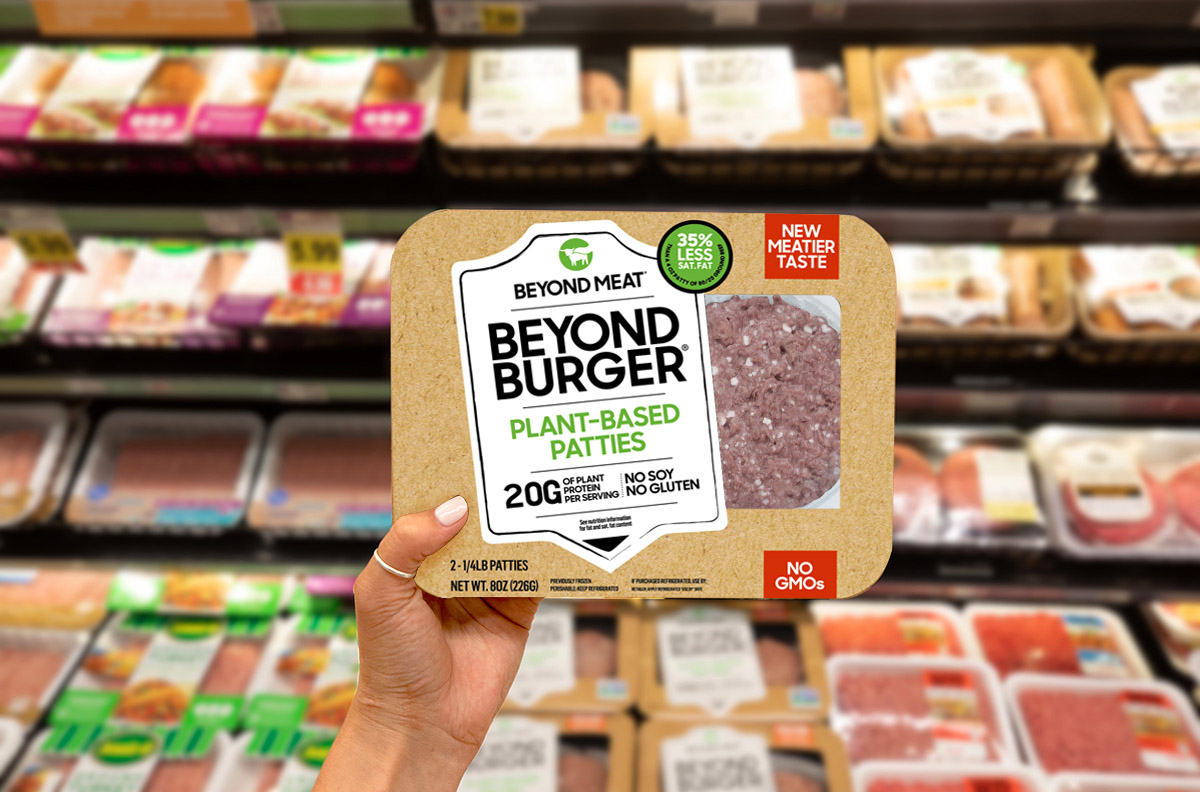
Researchers at the University of Helsinki studied 102 healthy men over six weeks, in what they dub the “BeanMan” study. The participants were split into two groups with equal protein intake but from different sources. One group ate about 760 grams of red and processed meat per week, while the other reduced their meat intake to 200 grams and filled the gap with legume-based foods like pea soup, bean patties, and plant-based meat strips.
Legumes bring much more fiber to the plate than red meat. Fiber slows digestion, helps regulate appetite, and may even increase the calories burned through digestive work. Legumes also replace some saturated fats with polyunsaturated fats, which are linked to heart health. Together, these changes likely influenced how the body stored and processed energy during the trial.
How Food Choices Affected Weight
The men in the legume group reported eating about one megajoule (roughly 240 calories) more per day than the meat group. Despite this, they lost an average of 1 kilogram (2.2 pounds) compared with just 0.3 kilograms (0.6 pounds) in the meat group. The authors noted, however, that the legume group also reported exercising more, and behavior changes are common in diet trials. This means the weight differences may not be explained by food choice alone.
Body composition results were mixed. Both groups lost some lean mass and fat. Importantly, waist circumference decreased significantly only in the legume group, while the waist-hip ratio actually increased in the meat group. At the study’s end, between-group differences were not statistically significant, but the within-group findings point to measurable changes in the legume group.
Cholesterol Changes Within Weeks
Beyond the scales, the study found differences in cholesterol. Men in the legume group had lower total and LDL (“bad”) cholesterol after six weeks. Meanwhile, cholesterol increased in the meat group. HDL (“good” cholesterol) fell slightly in the legume group but not in the meat group, showing that changes were not all one-directional.
The improvements came without calorie restrictions or exercise requirements. Researchers believe higher fiber, healthier fats, and reduced saturated fat intake played a role in these shifts.

Eating Beans Without Giving Up Meat Entirely
Participants in the successful group still ate some red and processed meat, about 200 grams per week, which is enough for a few smaller servings. This amount matches the upper limit suggested by the Planetary Health Diet, which ties personal health goals with environmental sustainability.
The approach may be especially useful for men, who typically eat far more meat than women. In Finland, men average about 762 grams of red and processed meat weekly, more than double Nordic nutrition recommendations.
Importantly, men in the legume group stuck with the diet. They ate 98–99% of the foods provided, including convenient plant-based options like frozen peas, ready-made soups, and vegetable patties. This high compliance suggests that swapping protein sources may feel more manageable than counting calories or giving up favorite foods altogether.
Nutritional Trade-Offs
The study also tracked vitamin and mineral status. By week six, 16% of the legume group were in marginal B12 status, and 14% had low iodine excretion. Some of this was already present at baseline: 4% had marginal B12 levels, and 14% had low iodine levels. So the short-term diet may have maintained or modestly worsened deficiencies for some participants. These nutrients stayed within adequate ranges overall, but the findings suggest anyone adopting this change long-term should pay attention to supplementation or fortified foods.
Iron intake, on the other hand, rose in the legume group. Most of it came from beans and peas, which provide non-heme iron. This form of iron is less easily absorbed than the heme iron found in meat, but it still contributed to higher overall intake.
What To Keep In Mind
The research focused on healthy, educated Finnish men aged 21–61, who were already health-conscious. This makes it unclear whether the same results would apply in other populations. Another limitation: foods were provided directly to participants, which removes the real-world challenge of shopping and cooking.
The study lasted only six weeks, so it cannot determine whether the benefits would persist in the long term. Still, the speed of the changes, especially in cholesterol, suggests that even short-term adjustments can produce measurable health improvements.
For men who eat large amounts of red and processed meat, replacing some of it with beans and peas may support both weight control and cholesterol improvements. The benefits appeared within weeks and without major sacrifice. However, nutrient gaps in B12 and iodine highlight the need for balance and awareness if making these changes for the long run.
Healthy Meal Swaps For Men Inspired by the Study
Looking to cut back on meat without losing flavor or satisfaction? Try these tasty, bean-based options that men in the Finnish trial enjoyed:
- Pea or bean patties – hearty alternatives to beef burgers.
- Pea soup – a classic comfort food packed with plant protein.
- Lentil stew – filling, fiber-rich, and easy to batch cook.
- Chickpea curry – bold spices and creamy texture make this a crowd favorite.
- Plant-based strips – use in stir-fries, wraps, or pasta dishes.
- Frozen peas – quick to add to omelets, rice bowls, or soups.
- Bean salads – mix kidney beans, black beans, or white beans with olive oil, herbs, and chopped veggies.
Tip: Keep a few canned beans or frozen peas in your pantry or freezer—they make it easy to whip up fast, high-protein meals.
Paper Summary
Methodology
The BeanMan study was a 6-week randomized controlled trial at the University of Helsinki involving 102 healthy men aged 21-61. Participants were randomly assigned to either continue high red meat consumption (760g/week, 25% of total protein) or switch to reduced meat (200g/week, 5% of protein) supplemented with legume-based foods providing 20% of protein. Both groups maintained 18% of daily calories from protein. Researchers collected 4-day food records, blood samples, 24-hour urine samples, and body composition measurements at baseline and endpoint.
Results
The legume group showed significant improvements: lower total and LDL cholesterol, reduced weight and BMI (despite consuming more calories), higher fiber intake, increased polyunsaturated fatty acids, and lower saturated fat. The legume group lost 1.0kg versus 0.3kg in the meat group. The legume group had lower vitamin B12 and iodine status but levels remained adequate. Iron intake increased substantially from plant sources.
Limitations
Participants were highly educated, health-conscious Finnish men, limiting broader applicability. The 6-week duration prevents assessment of long-term effects. Foods were provided rather than requiring independent meal planning. The controlled environment may not reflect real-world adherence challenges.
Funding and Disclosures
Funded by the Strategic Research Council at the Research Council of Finland (grants 327698, 352481, 327699, 352483). Authors declared no conflicts of interest. Food companies provided products but had no role in study design, data collection, analysis, or manuscript preparation.
Publication Information
European Journal of Nutrition (2025) 64:259. “Nutritional and health benefits of a partial substitution of red and processed meat with non-soy legumes: a 6-week randomized controlled trial in healthy working-age men” by Sari Bäck et al. DOI: 10.1007/s00394-025-03783-x
Disclaimer: This article is for general information only and should not be taken as medical or dietary advice. Anyone considering major diet changes should consult a qualified health professional.