Many trees, shrubs, and perennials can produce more blooms and stronger growth if you trim them back at certain points during the year. The ideal window depends on the type of plant. Take the mystery out of when and how to do it properly with this guide on pruning plants.
Getting Started
Start by removing any dead, diseased, or damaged stems as soon as you notice them. These can attract insects and diseases. Also, remove crossing branches, water sprouts—which are upright growing shoots on trunks or branches—and suckers, which are vigorous shoots growing near or from below the ground.
When to Prune Hydrangeas
Bigleaf and oakleaf hydrangeas bloom on old wood, so prune them before midsummer. If they are pruned in winter or early spring, you’ll remove the flower buds.
Reblooming types like the Endless Summer and Let’s Dance Series bloom on both old and new growth, so pruning time is less critical. Even if some buds are cut, new stems will still flower.
Panicle hydrangeas, such as ‘PeeGee’ and ‘Limelight,’ and ‘Annabelle’ arborescens flower on new wood. So they’re flexible in timing, but avoid pruning right before they bloom.
Spring-Flowering Trees and Shrubs
Spring bloomers like lilac, forsythia, and rhododendron develop blooms on last year’s growth. Prune them in late spring after they’re finished blooming. Pruning later or in winter removes flower buds, which reduces next spring’s blooms.
You’ll get vigorous blooms in spring by cutting some of the oldest shoots down to the ground to make space for new growth and flowers.
Summer-Blooming Trees and Shrubs
Summer bloomers like potentilla and crape myrtle flower on current season’s growth. Prune when they’re dormant in the winter or in early spring before new growth. You can cut them to the ground in late winter, and they will still bloom that summer.
A pole pruner with a rotating head will help you cut stems at the plant’s base. This saves time and reduces back strain.
Shrubs Without Showy Blooms
You can prune deciduous shrubs valued for foliage, like the golden smoke tree, at almost any time except late fall. Late-season growth may not survive winter. Do extensive pruning during winter dormancy.
When to Prune Clipped Hedges
For shrubs like boxwood in a shaped hedge, shear the new growth frequently during the early part of the growing season to maintain their size and form. Keep the top a little narrower than the base so that the upper branches don’t shade the lower ones. Stop shearing the hedge about six weeks before your area’s average first frost. Late winter to early spring or mid-to-late summer are some of the best times to prune hedges more drastically.
If you’re growing a privacy hedge, reduce the amount of pruning maintenance needed by selecting shrubs that grow only as tall and wide as necessary to provide screening. Allow them to grow into their natural form, and you won’t have to prune often, if at all.
When to Prune Roses
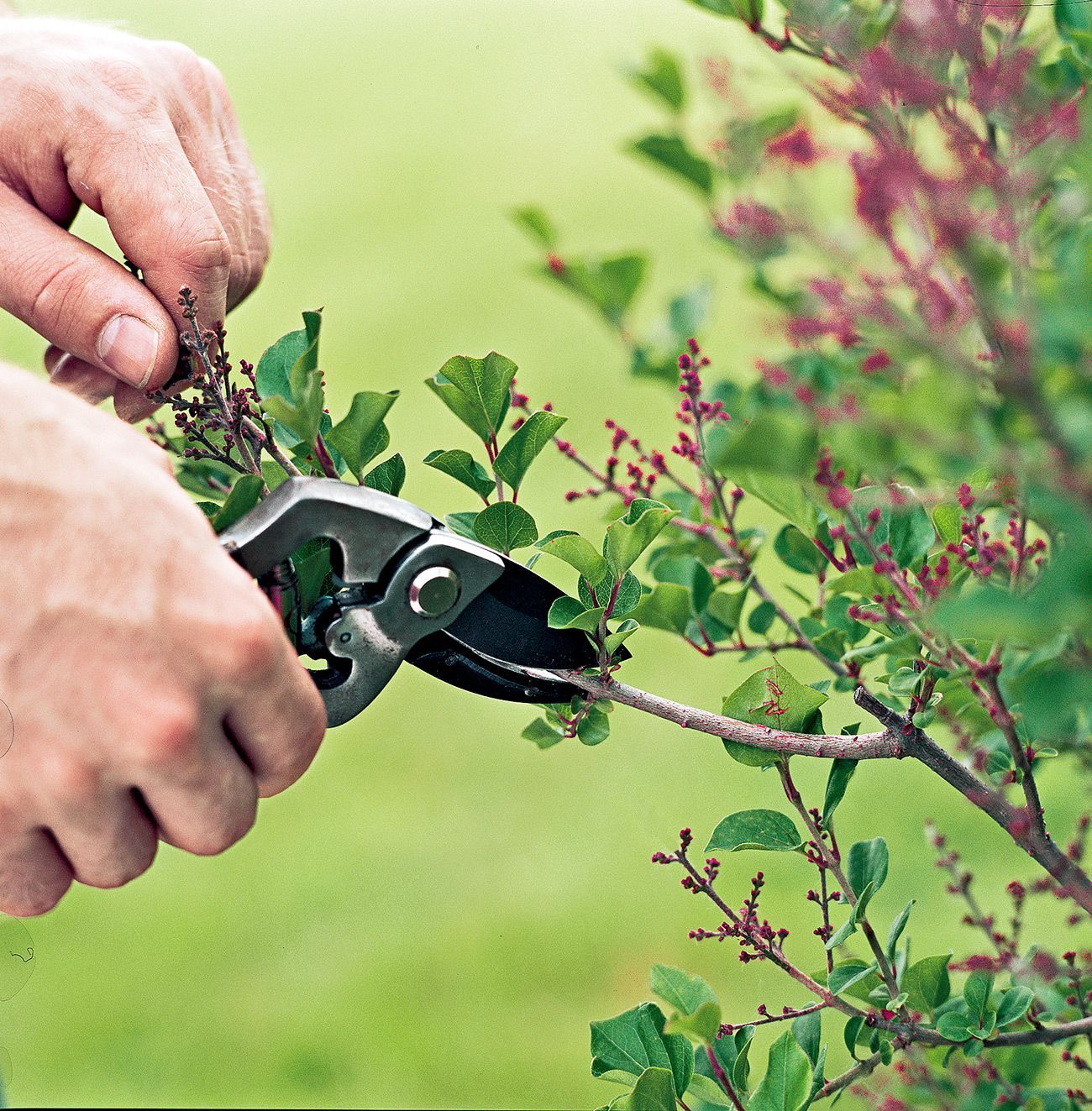
Treat climbing roses and old garden roses that bloom only once per year at the same as other spring-blooming shrubs. Prune after they finish blooming. Repeat bloomers, including hybrid teas, floribundas, grandifloras, miniatures, and modern shrub roses are pruned mostly to shape the plant or to remove winter-damaged stems (as shown here). If they become overgrown, cut them back in early spring.
When to Prune Deciduous Shade Trees
Prune shade trees like oak, linden, and ash when they are dormant in winter. It’s easiest to see the branching structure at this time of year, and you’re less likely to spread diseases through the pruning wounds. As with non-blooming shrubs, avoid pruning them late in summer.
When to Prune Deciduous Fruit Trees
Prune apple (including crabapple), peach, pear, plum, and cherry trees in midwinter. Although winter pruning removes some flower buds, the goal is to open up the tree for more sunlight so you’ll get a better fruit harvest. Dormant pruning is critical, especially for apples, pears, and crabapples, as it helps prevent exposure to fireblight—a bacterial disease—during the growing season. Always use clean pruning tools to avoid spreading diseases.
To control the spread of diseases while pruning, dip your pruning shears in rubbing alcohol or a solution of one part bleach to nine parts water.
When to Prune Broadleaf Evergreens
Most broadleaf evergreens, including holly, mahonia, and some types of magnolias, don’t need much pruning. The best time to prune them is in early spring, just before they put on their growth spurt. You can do minor shaping and pruning at other times of the year, too.
Save on holiday decorations by snipping a few branches for winter holiday greenery.
When to Prune Needle-Leaf Evergreens
Most trees and shrubs with needlelike or scalelike foliage (spruce, juniper, cypress, arborvitae, fir, yew, Douglas fir, and false cypress) are best pruned early in the growing season. Avoid cutting back into wood that doesn’t have any green needles; it may not sprout new growth. Like broadleaf evergreens, you can trim a few branch tips in midwinter to take some greenery indoors.
When to Prune Pine Trees
True pines are pickier about their pruning needs than other needle-leaf evergreens. Pines only form buds at branch tips before the stem becomes woody. For the best results, only prune pines in the candle stage: Before the new shoots turn woody and before the pine needles have fully expanded. Prune just a portion of the new growth, removing up to half of the expanding candle.
When to Prune Perennial Flowers
Most perennial flowers look best if you remove faded flowers, called deadheading. As a bonus, many perennials will push out another cycle of blooms after deadheading. If your perennial flowers become too tall and leggy or flop open in the middle, try shearing them back to 6-12 inches above the ground. This type of haircut causes them to branch and become stockier.
When to Prune Annual Flowers
Deadhead annual flowers regularly to keep them blooming well. Removing the old flowers prevents them from setting seed and allows plants to put more energy into blooming. Some annuals, like petunias, sprawl and develop bare stems at their bases. As with perennials, you can shear these rangy plants to force more compact growth and renewed bloom.
When to Prune Bush Berries
The most productive portions of blueberry, gooseberry, and currant bushes are stems that are three years old or less. To maintain a constant supply of productive wood, prune out about a third of the oldest stems on these shrubs each winter. Cut the old stems off at ground level.
When to Prune Cane Berries
Raspberries and blackberries grow on stems known as canes. Typically, these don’t bear fruit until their second year. After fruiting, the cane dies, so you must remove these two-year-old canes promptly to prevent disease and make room for new growth. For canes in their first year, pinch back tips once they reach 3 to 4 feet to encourage branching.
Everbearing raspberries are different. They produce a late-summer crop on first-year cane tips. Don’t pinch them in midsummer. Let the canes fruit and flower in fall, and then remove their tips after fruiting in winter. The next season, the lower parts will produce fruit. Remove these after they’re done fruiting.
When to Prune Grape Vines
Grapes grow vigorously and need extensive pruning each year to keep them productive. Most training systems for grapes involve developing a main stem or trunk with several lateral stems or arms. Grapes fruit on these lateral stems, which are shoots from the current season’s woody growth. Prune all grapes close to the lateral arms each year during the dormant season to produce the best fruit. The degree of pruning depends on the vigor of the variety: Prune vigorous varieties more heavily than weak growers.