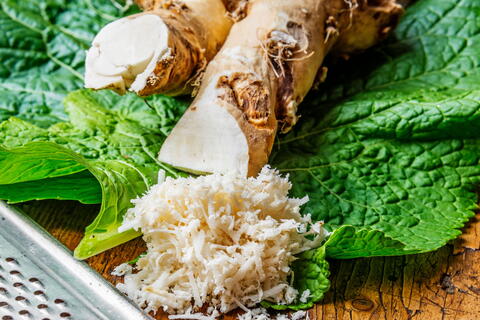
Want to bring some bold flavor to your backyard? Horseradish is the spicy secret weapon your garden didn’t know it needed! This cold-loving perennial grows underground but packs a punch above its weight. Plant it once in early spring, and by fall, you’ll be digging up a fiery root perfect for homemade sauces, zesty relishes, or a nose-tingling roast beef companion. Let’s dig into how to grow horseradish the right way.
Horseradish has a long growing season, and you can’t start using it until one year after planting. Also, this root must grow in a climate where the fall and winter are fairly cold. It’s adaptable and tough, but providing the proper growing conditions will produce the biggest, sweetest, and most flavorful roots.
About Horseradish
Horseradish is a member of the mustard family. This hardy perennial grows a fleshy taproot that only develops in cold weather, and the best roots have endured several frosts.
Above ground, horseradish sends up coarse, elongated, emerald green leaves that resemble those of common curly dock. This foliage, which rarely grows more than 2 feet tall, belies the real action underground: In rich soil, the fleshy horseradish taproot can penetrate as deep as 10 feet if left undisturbed for several years and will send out a tangled mass of horizontal secondary roots and rootlets over a diameter of several feet. Just a word of warning: it’s so easy to grow, it might just take over—so plant with purpose!
If severed from the main taproot, any rootlet can give rise to a new plant; this is one way to start a crop. Aspiring horseradish growers can also obtain root cuttings—sometimes called “starts” or “sets”—from seed companies and many local garden supply stores.
Roots are available at farmers’ markets, supermarkets, and mail-order nurseries.
“The most common problem with horseradish is how to keep it from growing where you don’t want it,” explains Charlotte Welliver, a Master Gardener with PennState Extension. “It can become aggressive if not kept under control. To control the spread, remove the entire root, even the branches, when harvesting. Replant only the number of roots you want for the following season. Whatever you do, don’t till up soil containing horseradish roots because you will risk spreading the plant all over the garden. Almost every little piece of root will sprout where it lies.”