The amendment follows an initiative by Europe’s most prominent center-right political family, the European People’s Party (EPP), that backers say aims to protect farmers.
“It’s about transparency and clarity for the consumer and recognition for the work of our farmers,” Céline Imart, a supporter of the bill, said during debate, claiming that supermarket labels can be misleading.
The plan would reserve “meaty” terms — such as steak, schnitzel, sausage, and burger — for products derived from animals. It is part of a broader package aimed at improving farmers’ bargaining power in supermarket pricing, including a proposal for mandatory written contracts.
In Germany, the birthplace of the bratwurst, meat consumption has fallen to record lows, consumption of plant-based alternatives is booming amid growing health, environmental, and ethical concerns.
Consumer advocates say the fuss over the names is overcooked.
A 2020 survey by the European Consumer Organization found that 68 percent of consumers aren’t confused by terms like “veggie burger,” as long as it’s clear they’re plant-based.
Germany’s consumer protection organization, Verbraucherzentrale, agreed, saying people actually prefer recognizable names for meat-replacement products.
“Nobody accidentally buys tofu sausages because they think they’re beef sausages,” said Chris Methmann of Foodwatch. “Rather than consumer protection, this is more of a gift to the meat industry.”
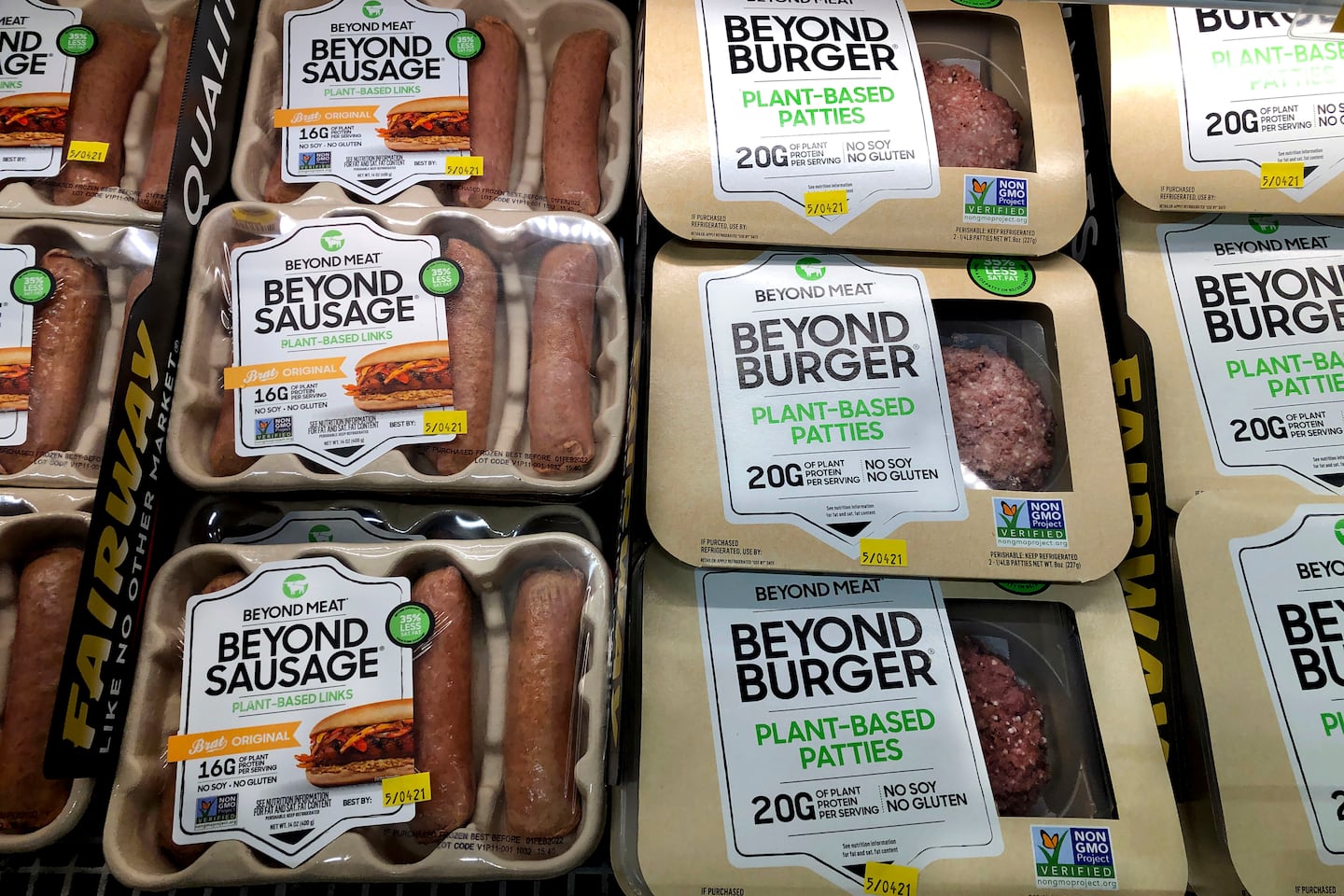
A joint letter opposing the ban — signed by major food sellers in Germany, including Burger King, Beyond Meat, and the supermarkets Aldi Süd and Lidl — urged lawmakers to keep their hands off veggie vocabulary.
A labeling ban, they wrote, would undermine “the goal of a resilient and diverse food supply.”
“An EU-wide ban on familiar terms such as ‘burger,’ ‘schnitzel,’ or ‘sausage’ jeopardizes consumer orientation, innovation, and the growth of the entire sector,” said Laura Gosciejewicz, spokeswoman for Rügenwalder Mühle, a traditional meat company whose portfolio of products is now nearly 70 percent vegetarian and vegan. “Various studies show that these established terms provide orientation and clarity for shoppers and do not lead to confusion.”
Still, the idea has strong backing from traditionalists, including German Chancellor Friedrich Merz of the conservative Christian Democratic Union and Agriculture Minister Alois Rainer of the Christian Social Union, the CDU’s Bavarian sister party.
“A wurst is a wurst,” Merz said Sunday on a political talk show broadcast by ARD. “Wurst is not vegan.”
Labeling is a serious matter in Europe, particularly when it comes to geographic indicators. Only sparkling wine from France’s Champagne region can be labeled as such, leaving the Spaniards to their cava and the Italians to prosecco.
But Europe is hardly the only market wrestling with labeling questions when it comes to vegetarian products. Similar debates have played out elsewhere, including in the US, and not just over imitation meat, but faux milk and rice products as well.
For some in Germany, meat is a matter of identity. Arguably, for no one more so than Markus Söder, leader of the federal state of Bavaria, who last year said meat and sausage have “almost constitutional status” in his southern German state.
Critics say conservative politicians are turning veggie sausages into political hot dogs, portraying them as a threat to heritage and to farmers — as opposed to a lifesaving way to cut the cholesterol count of constituents.
“It’s utterly nonsensical that our elected officials are wasting time — and taxpayer money — on a non-issue like this,” said Marilda Dhaskali of the conservation group BirdLife International. “Plant-based foods are a solution, and this vote actively works against the progress being made.”
The EU already rejected a similar ban in 2020, confirming that most shoppers can tell their soy from their sirloin. Getting a French-speaking supermarket clerk to hear the difference between a Beyond Burger and a viande burger while speaking with an American accent is another matter entirely.
Negotiations will now be held among the bloc’s member states, but the stakes are high for Europe’s booming plant-based market. Producers of veggie products have raised concerns that the ban would require redesigning all packaging, as well as changes to product descriptions, websites, and advertising.
Germany, renowned for its traditionally meat-heavy cuisine, is now Europe’s biggest market for plant-based alternatives, with production of vegan and vegetarian substitutes more than doubling between 2019 and 2024. The meat and dairy alternatives industry in Germany could be worth $76 billion by 2045, creating up to 250,000 jobs, according to a study this year by the Good Food Institute Europe.
Industry groups argue that Europe should stop skewering innovators and give them a fair slice of the market. Despite facing a 19 percent value-added tax rate on substitutes compared with seven percent on meat and milk, the sector continues to grow rapidly in Germany.