
A Dutch developer of plant-based meat alternatives is using automation technologies including precision servomotors to create foods that closely match the meat products they designed to replace. The process uses less energy to produce convincing meat substitutes that are claimed to be cheaper than rival products.
The demand for products based on plant protein – particularly meat substitutes – is growing rapidly. This trend is driven by health benefits, including high levels of fibre, vitamins and nutrients, as well as low calories and fat content. Plant-based foods also need less water and land, and generate fewer greenhouse gas emissions, making them more sustainable.
But food producers face challenges in replicating the textures and flavours of traditional meat products, which makes it difficult to persuade some traditional meat-eaters to make the switch.
Dutch Structuring Technologies (DST), based in the Netherlands, is addressing this issue with innovative technologies and production techniques that aim to create more realistic plant-based meat alternatives.
Current methods for processing and modifying plant proteins rely on outdated, heat-intensive extrusion technologies that were not developed to produce these ingredients. Many meat-replacement producers are therefore looking for the next big breakthrough.
Extrusion technologies have several drawbacks, including quality fluctuations due to machine and parameter variations, high energy consumption that adds to production costs, and the degradation of ingredients caused by high pressures and temperatures.
To compete with traditional meat-based foods, new plant-based alternatives must closely mimic their textures and flavours, while maintaining a competitive price point, and consistent quality.
DST says that its new Sheartex process delivers products that are close to a real meat-like texture. It uses plant protein and water as its main ingredients and by controlling the parameters of a continuous shearing and mixing process, tailors the conditions to obtain the required meat-like texture.
The technology, co-developed with a Dutch mixing system specialist, Sobatech, is claimed to offer significant advantages over traditional methods. It uses a third of the energy of “high-moisture extrusion cooking” techniques, helping to bring costs down to a similar level to animal proteins.
“Using precision control, Sheartex can create products with fibres that exhibit particular lengths and strengths, so they can more closely match the specific animal meat products they are replacing,” explains DST’s co-founder, Julian Lekner. “What is more, fats, emulsions and other wet ingredients – as well as dry ingredients such as flavours and colours – can be added during the processing stage so that they form an intrinsic part of the textured protein, removing the need for the post-processing steps required in other production methods.
“Our Sheartex produces high-quality protein products – with textures ranging from salmon to beef jerky – at 1,000kg per hour, using far less energy than existing processes,” he adds. “This not only means we are able to put a wider variety of plant-based meat on everyone’s table, but also, the cost of our products will be close to current animal meats.”
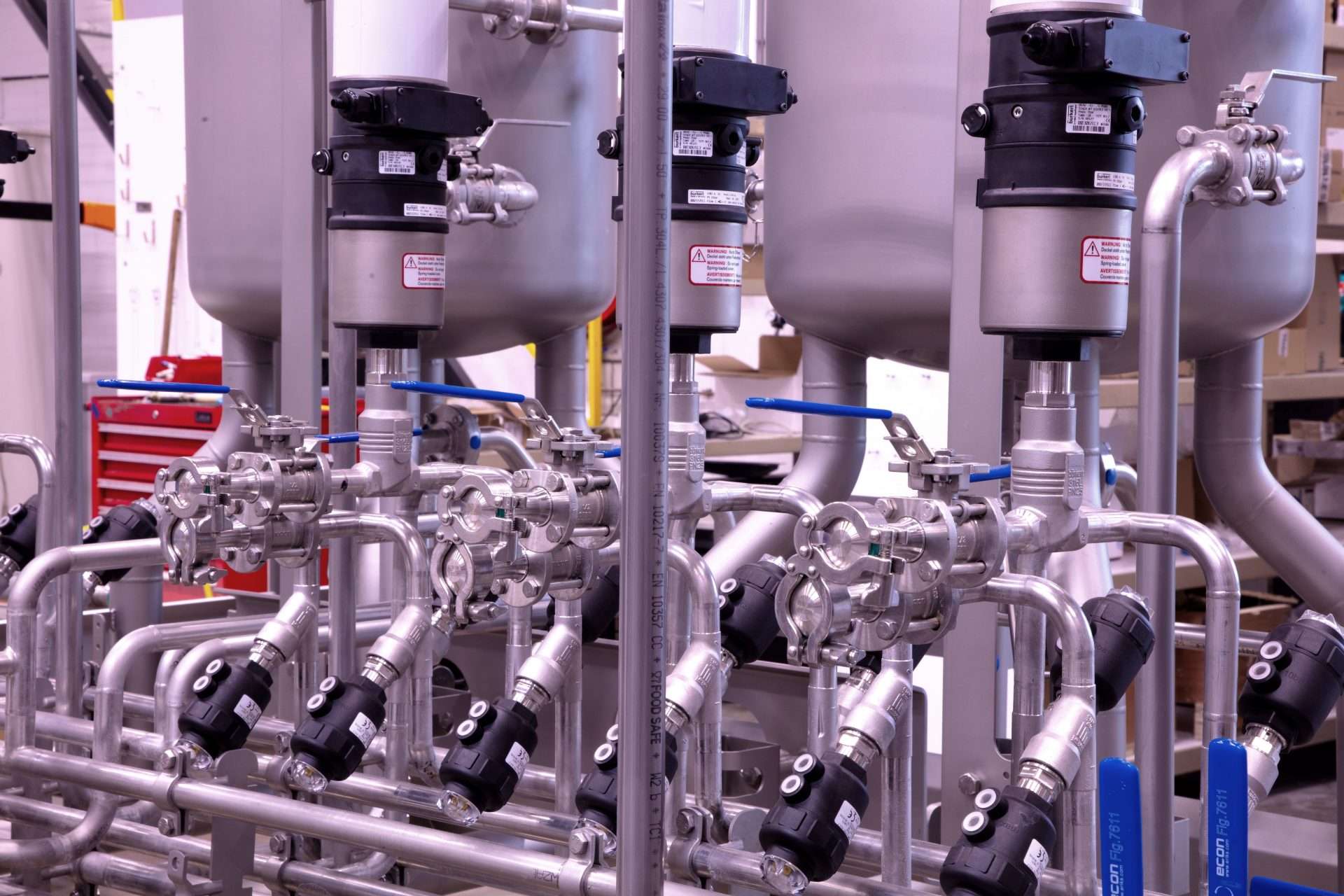
 DST’s production process uses a suite of Rockwell Automation technologies
The equipment needed to automate DST’s production process has been supplied by Routeco Netherlands
“Sheartex is a continuous process,” explains Routeco sales engineer, Clint op den Buijsch. “Although this means DST can create a more realistic meat alternative in terms of texture and flavour, it does require very precise control of the mixing and microdosing, which is why Sobatech and DST opted for a solution driven by Allen-Bradley Kinetix servomotors.
“The microdosing of the ingredients in the continuous process can only be achieved with servomotors, as it is crucial to keep the tare weight of the dosing hopper as low as possible,” he adds. “The servo-controlled dosing hoppers must achieve a dosing accuracy of within 1% when dispensing what can be expensive and strong-flavoured micro-powders.”
The motors are part of a suite of Rockwell control and monitoring technologies that DST is using, including a PowerMonitor 5000 energy-monitoring system, GuardLogix safety controllers, Power-Flex 527 variable-speed drives, and Studio 5000 design software. A DLR (device-level ring) network topology reduces the need for cabling which, combined with the drives’ Safe Torque Off function, can halve installation times.
“Another critical aspect of the DST process is the amount of mechanical energy applied to achieve the desired texture,” explains Sobatech’s managing director, Geneviève Lekner. “This energy value has a correlation with the quality of the final product. Energy monitoring solutions from Rockwell are particularly well-suited for capturing and analysing this critical data, providing valuable insights that enable the optimisation and control of production processes.”
DST’s Sheartex process represents a major advance in plant-based meat production. By improving texture, lowering costs, and enhancing production efficiency, it is helping to make plant-based proteins a more viable alternative to animal meat.
DST: LinkedIn