TiNDLE Foods is on a mission to make saving the planet easy by creating delicious, sustainable foods from plants. Its flagship product, TiNDLE Chicken, has already won over chefs globally and is now available for home cooks. The company’s offerings include plant-based chicken nuggets, tenders, burgers, crispy fillets, wings, and more. TiNDLE is expanding its product line to include everything from plant-based chicken and pork to premium oat milk, all while making plant-based eating irresistibly tasty and satisfying.
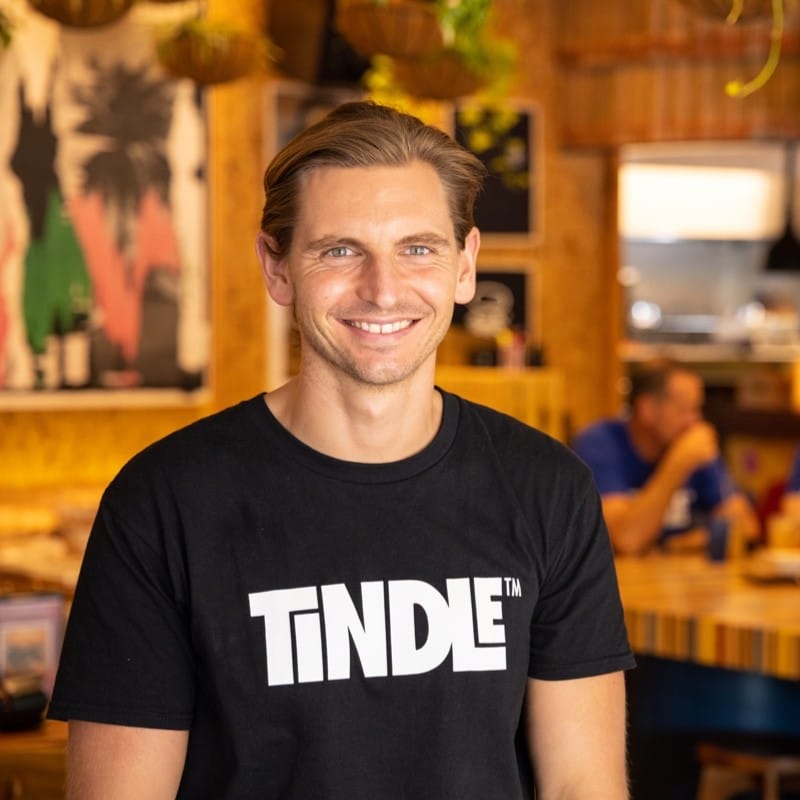
Timo Recker, co-founder and CEO of TiNDLE Foods, is also a member of the Founders Board at LIVEKINDLY Collective and co-founder and Executive Chairman at Next Gen Foods. With his extensive background in plant-based food innovation, Timo has been a driving force behind TiNDLE’s rapid growth and success in the global market.
In this interview, Timo shares insights into TiNDLE’s evolution, the plant-based sector’s future, and the challenges and opportunities ahead.
Can you start by introducing TiNDLE Foods to our readers? What sets the company apart in the plant-based sector?
We started TiNDLE Foods (formerly Next Gen Foods) in early 2020, right at the start of the pandemic. The majority of that year was spent perfecting our formulation for our first TiNDLE Chicken product, which we then introduced in March 2021 with select culinary establishments and some of the best chefs in Singapore. This allowed us to make sure TiNDLE Chicken delivered the best possible experience for consumers and get back detailed diner and chef feedback on what people liked about our chicken, from the flavor to texture to how it smelled, cooked, etc.
Our focus on high-quality culinary experiences is what sets us apart. From the start, we’ve set a high standard for our entire product range – whether it was a foodservice application or one of the retail products we offer today – so we’re delivering the best in terms of ingredients, flavor, and texture. Additionally, it’s always been important to us to have a shorter and simpler ingredient list to make sure we met our consumers’ needs. Our initial products had less than 9 base ingredients, all of which were common and familiar non-GMO plant-based sources, such as soy, oat fiber, and sunflower oil. That’s a core value we’ve held onto the last five years, especially as we broaden our product range and increase our offerings.
Why did you choose to name the company after physicist John Tyndall, and how does that reflect your values?
TiNDLE is a modern nod and reference to the 19th-century Irish physicist, John Tyndall, who was the first person to prove the connection between atmospheric carbon dioxide and the greenhouse effect. Our mission is to help save the planet from the growing climate disaster by creating delicious foods that have a lower environmental impact. TiNDLE was our consumer brand and is now the name we use behind all of our products, which offer delicious and enjoyable solutions for dining more sustainably.
You initially chose to focus on chicken alternatives. What made chicken the starting point for your product development?
Before we even launched a consumer product and brand, our team looked at a variety of proteins and foods that could help us deliver on our mission. We wanted to find simple, yet delicious solutions to help reduce our intake of animal-based products.
We ultimately found that chicken was the best solution given it’s the world’s most popular protein. In so many cultures and culinary traditions around the world, you see chicken as a staple or ingredient.
Launching the product and brand in Singapore was also a great starting point given its rich culinary scene and foodie culture. It was an ideal place to test out TiNDLE Chicken and various applications, from South Asian curries to Chinese baos or dumplings and also integrated into global foods like burgers and pastas. Today, our chicken is sold in restaurants and grocery stores all over the world, including in Singapore, as well as in the US and parts of Europe.
Since launching in 2020, how has your vision for TiNDLE evolved?
Since launching, we have had to adapt to a number of shifts in our category and the global market at large. We started our business in the middle of the global pandemic and at a time when there were large concerns about meat quality and supply. The pandemic brought further attention to the inefficiencies and uncertainty of a global food system and supply chain that relied on the health and well-being of animals.
Today, those things are all still true. We continue to experience supply chain issues, particularly when it comes to meat and other animal-based products. The recent effects of the bird flu that affected the cost of goods, particularly eggs, for example, in the US, have hit consumers hard. However, we remain in a fairly widespread culture of meat-loving and appreciation. It’s reached a high recently, too, with meat’s association with ‘cleanliness’ and overall health and optimization.
With that, our vision mostly remains the same with a few adjustments here and there. We’ve always sought to bring good quality foods to market, which are 100% plant-derived and contain no animal products. From the start, we’ve used non-GMO soy and other ingredients. We’ve always been fully plant-based, and because of that, our foods don’t have any hormones, antibiotics, or cholesterol. Today, we may lean more into health messaging to adapt to our consumers’ desires, but we have always sought to bring delicious, nutritious, and sustainable plant-based foods to our customers.

You’ve just expanded into over 1,300 US stores. What’s driving this major retail push?
Retail is an important channel for us, partly because we have the chance to directly engage with the shopper in the grocery store aisle, but also because it’s where we have the opportunity to see increased volume and repeat purchases from shoppers interested in plant-based foods.
About a year ago, we were only sold in about 150 grocery stores in select regions of the U.S. Today, we’ve grown to offer our products at nearly 1400 grocery stores nationwide, which includes new partners like the Kroger Family of Stores, as well as popular retailers Wegmans and Meijer.
In addition to brick and mortar stores, we’re selling our products through ecommerce partners like Hungryroot and Vegan Essentials, and hundreds of foodservice outlets – and that number continues to steadily grow. We’re planning additional grocery launches in the coming months and hope to make it even more convenient for American shoppers to find TiNDLE at their favorite retailers.
Which international markets are currently the most promising for TiNDLE?
The U.S. remains a priority market, but we are also focused on growth within Germany and Switzerland in particular. This Spring, we launched TiNDLE products in Aldi stores across Germany, which is the fourth largest retailer in the world, and have recently introduced our newest premium product line, TiNDLE Gourmet Chicken, in EDEKA stores too.
The Gourmet Chicken products are our latest premium offering for retail consumers, and our aim is to bring the Gourmet products to more partners globally, particularly in the U.S. We feel it brings a next-level experience when it comes to plant-based protein.
How is TiNDLE preparing for the challenges and opportunities in a more competitive market?
Today, even more so than in our earlier years, our competition is the animal meat industry and the traditional way of producing food through animal agriculture. In our category, we’ve seen that shelf space in retail stores is shrinking (when compared to what it looked like 3 or 4 years ago), and that’s partly why we also see sales figures declining. This is not just a challenge exclusive to us in the plant-based meat category, as we’re experiencing record-high prices on the costs of goods, thanks to inflation and other production concerns like the recent bird flu epidemic. At the end of the day, it’s clear to us that we still need to diversify our sources for healthy and sustainable foods that can keep feeding our growing planet.

What leadership lessons have you learned as the company has scaled globally?
The initial global approach was extremely challenging when factoring in our rapid scale-up and hyper-growth phases. We had great products, but they still needed to cater to local tastebuds and being global (a global company but with a localized market approach) is hard to execute as it takes additional resources that are in market. We needed to do local NPD, build local teams in addition to a global layer and build local networks and consumer communications.
What major trends do you believe will shape the plant-based sector in the next few years?
A trend that has already taken off is the desire for more clean-label, better-for-you products in the plant-based sector. We’re seeing it become less of a trend and more of an essential characteristic of new products and innovations today (and likely over the next few years).
What is next for TiNDLE?
We remain focused on bringing the best-tasting products to market and utilizing our strong R&D capabilities to deliver even better and improved foods to our customers. Like I mentioned earlier, we recently debuted the Gourmet Chicken line in Germany and have plans to expand its availability in the markets where we currently conduct business. We’re really proud of the end product, and the line uses our grounding TrueCut™ technology platform. This allows for each chicken cutlet to exhibit a juicy, authentic meaty texture, while staying true to our commitment to using high-quality, non-GMO soy as the primary protein source. It’s an extremely versatile product that we’re finding expert chefs and everyday home cooks really enjoy equally!